Today's
EarthStation1.com 15% (Or More!) Off Commemorative Memorial Title:
Teenagers! Classic Youth Social Guidance Films DVD, MP4, USB Drive
Today, July 15, 2026
July 15: World Youth Skills Day: --
Equipping youth with essential life tools, paving paths toward
success beyond the classroom, shaping promising futures. The
planet now holds more youth than it ever has before! That's why it
is critical for young people to be prepared for the future with
the skills they need to navigate adult life and thrive in the
modern world. World Youth Skills Day was founded to address the
concerns of under-served youth while drawing attention to the
need. Sadly, many around the world youth are left behind, stuck at
a crossroads of needing to work but finding themselves
ill-equipped to do so. No longer able to simply find jobs for
unskilled laborers, teens and young adults need to learn basic
skills and get educated so they can reach their full potential in
life, avoiding the trap of poverty and violence. The inaugural
celebration of World Youth Skills Day took place in 2015 when it
was founded by the United Nations General Assembly . The
organization decided to use the event to celebrate the strategic
importance of making sure that teens and young people are equipped
with skills for work, employment and entrepreneurship. Each year,
the United Nations provides a theme for World Youth Skills Day, to
focus on a specific aspect or facet of the event. On Sale Until
Midnight Tonight PT!
https://store.earthstation1.com/teenagers-classic-youth-social-guidance-films-dvd-set-2-disc2.html
Today's
EarthStation1.com 15% (Or More!) Off Commemorative Memorial Title:
Crossed Sabers: The Story Of The U.S. Horse Cavalry DVD, Download,
USB
Today, July 15, 2026
July 15: Celebration Of The Horse
Day/National I Love Horses Day: -- Encourages people to think
about the economic, cultural, and historical contributions that
horses have made to the United States. It was also established to
honor the importance of horses to the country's security,
recreation, and legacy, as well as their continuous impact on
America through media such as film and their continued presence in
open space. Horses have long been important to the American
continent, even before the United States was founded. Horses are
thought to have frequented these countries between 8,000 and
10,000 years ago before going extinct. They were reintroduced to
the Western Hemisphere in the late 1400s, and to Florida in 1538.
Colonial Spanish Horses were common in the southeastern and
western U.S. from the 1500s until the mid-1800s when crossbreeding
became common. Around the same time, some horses were released
into the wild, and herds of feral horses known as mustangs roamed
the plains. In the United States now, there are over 33,000 feral
horses. Horses were acquired by Native Americans in the 1500s and
1600s. The Comanches were among the first tribes to receive them,
followed by the Blackfoot and Crow. Horses were especially
significant to Great Plains Native Americans. Horses were utilized
by cowboys on cattle drives and ranches in the 1800s and for
transportation, hauling, and farming. Horse racing grew in
popularity during this period, with the introduction of
Thoroughbred horse racing. Horses were bred for military and
agricultural reasons as the 1900s began, but with mechanized
transportation becoming more prevalent after World War I, horse
populations declined. There were over 20 million horses in the
nation in 1915, but only 4.5 million in 1959. In the United States
today, there are about 9.2 million horses. On Sale Until Midnight
Tonight PT!
https://store.earthstation1.com/crossed-sabers-the-story-of-the-us-horse-cavalry-dvd.html
Today's
EarthStation1.com 15% (Or More!) Off Commemorative Memorial Title:
The Hippie Temptation (1967) w/ Harry Reasoner DVD, MP4, USB Stick
Today, July 15, 2026
July 15: National Give Something Away
Day: -- Imagine a day when you could clean house and get rid of
clutter, show someone that you care, gift small things to
strangers, and generally making the world a better place. Yes,
this day does, in fact, exist! It's better to give than to
receive, and this is the aim behind National Give Something Away
Day. "One man's trash is another man's treasure" doesn't
literally mean junk or trash, but items that can serve someone
else better. The day encourages people to give freely to others
without expecting anything in return. This is also a good way to
declutter and pass on things that no longer fit us or are useful
to us. Most of us undoubtedly have way more items than we need.
National Give Something Away Day was established on July 15, 2015,
by Linda Eaton Hall-Fulcher, a self-proclaimed giver. On the day's
Facebook page, Linda advocates giving back to the world. According
to her, this day is for everyone who cares. It advocates for
giving to friends, family, and the less fortunate; for mindful
consumerism; and for being more aware of our carbon footprint.
Giving is the simplest act to exist that can brighten up another's
day, and at times really bring about a positive change. Whether it
is something small like giving a compliment, giving your friend a
jacket of yours that she really likes, or donating clothes to the
less fortunate, these little things can have a big impact. Even
though giving is a selfless act, the reward goes both ways. We
benefit from feeling good about giving and making someone's day,
and at the same time, we also let go of items that we no longer
need and are just lying around. We also learn to be grateful for
all our blessings and it makes us feel like responsible people who
are improving the community. On Sale Until Midnight Tonight PT!
https://store.earthstation1.com/the-hippie-temptation-dvd-1967-harry-reasoner-cbs-tv-documen1967.html
Today's
EarthStation1.com 15% (Or More!) Off Commemorative Memorial Title:
Music Documentaries III Video Pioneers Tom Waits Turtles DVD, MP4,
USB
Today, July 15, 2026
July 15: National Be A Dork Day: -- Get
ready to let go of your inhibitions today. A dork, by definition,
is a person who generally lacks social skills and tends to have
eccentric interests and hobbies. Usually, a dork's fashion sense
is also questioned as their outfits tend to be mismatched, 'ugly,'
or something most people would not prefer to wear. With the advent
of technology and the growing exposure and influence of pop
culture, dorks have been depicted as a 'dumb' group of people who
have conventional 'ugly' features like buck teeth, acne, and poor
eyesight with large-framed glasses. But National Be A Dork Day
aims to celebrate the dork in all of us! The National Be A Dork
Day was created by Thomas and Ruth Roy at Wellcat. The duo is
credited with creating and celebrating many other unique concepts
and ideas for their company that focuses on holidays. The word
'dork' has interesting origins. It was first used in the late
1800s as an informal and slang term for 'penis'. People used it
mostly in the British army to make fun of each other. However,
almost a century later, in the late '60s, the word had reached
American shores, with people using it in university/college
settings. Initially, it was seen as a derogatory term since it
mocked a person for their lack of social skills. Yet, as time
passed by, the term took on less belittling connotations. Today,
in many settings, people employ the word 'adorkable' to describe
someone who is both socially awkward, but cute and adorable at the
same time. Many tend to confuse 'dork' with 'nerd' and 'geek'.
Nerds and geeks are people who are interested in subjects to the
point of utter fascination and tireless research. People who are
diehard fans of things like pop culture icons, comics, and
scientific research are also considered to be nerds and geeks.
Such people will know the ins and outs of their passion project
from A to Z. Dorks, on the other hand, are generally interested in
things that are not considered conventionally 'intelligent'.
Moreover, their social awkwardness also usually means they don't
have a large social circle. But, don't let that stop you from
wholeheartedly celebrating this day. Unleash your inner dork and
let the world know that you are comfortable in your own skin. On
Sale Until Midnight Tonight PT!
https://store.earthstation1.com/music-documentaries-iii-dvd-video-pioneers-tom-waits-turtles.html
Today's
EarthStation1.com 15% (Or More!) Off Commemorative Memorial Title:
The Presidency: The Press & The People: Press Secretaries DVD
MP4 USB
Today, July 15, 2026
July 15: Developmental Disability
Professionals Day: -- This day is all about recognizing the work
done by developmental disability professionals, who often go
unnoticed despite providing services to some of the most
vulnerable people in the country. The National Association for
Qualified Intellectual Disabilities Specialists (N.A.Q.), the
primary national organization recognizing developmental disability
professionals, established the day in 2020. These professionals
include Qualified Intellectual Disabilities Professionals
(Q.I.D.Ps), case managers, service coordinators, and other titles,
depending on which state they work in. They assist people with
developmental disabilities through facilitating the provision of
residential services, creating employment opportunities, serving
as behavior analysts, coordinating medical services, and more.
'Qualified Mental Retardation Professional' (Q.M.R.P.) was the
first phrase coined for intermediate care institutions for the
developmentally impaired that was used in federal guidelines in
the late 1970s and early 1980s. The term 'mental retardation' was
replaced with "intellectual disability" after the
Centers for Medicaid and Medicare Services (C.M.S.) changed the
"State Operations Manual Appendix J - Guidance to Surveyors:
Intermediate Care Facilities for Individuals with Intellectual
Disabilities" to implement a change in terminology and
President Barack Obama signed Rosa's Law in 2010. Thus, several
states and organizations changed the designation of a Q.M.R.P. to
either 'Q.D.D.P.', meaning 'Qualified Developmental Disability
Professional', or 'Q.I.D.P.', meaning 'Qualified Intellectual
Disability Professional'. C.M.S. changed Appendix J in December
2013 to update the wording used to indicate developmental
impairments. Trinity Services workers founded N.A.Q. in 1996 to
suit the requirements of Developmental Disability Professionals
(D.D.Ps). It is dedicated to addressing historical, conceptual,
methodological, and ethical issues related to D.D.Ps. It also
provides an avenue to connect with other professionals, share
evidence-based best practices, and serve as a resource for
learning and continued education. The National Association of
Qualified Mental Retardation Professionals was the name of the
organization when it was created. Since most states had turned
away from using the term 'mental retardation,' except for
diagnostic or reporting requirements, in 2009, they changed their
name to 'the National Association of Qualified Developmental
Disability Professionals.' In 2018, they changed their name once
again to conform with federal terminology, to 'the National
Association of Qualified Intellectual Disability Professionals.'
And finally, in 2022, they renamed themselves simply as 'N.A.Q.'
On Sale Until Midnight Tonight PT!
https://store.earthstation1.com/the-presidency-the-press-amp-the-people-dvd-10-press-secretari10.html
Today's
EarthStation1.com 15% (Or More!) Off Commemorative Memorial Title:
Images Of Jesus: Visual Art Representations Of Jesus DVD MP4 USB
Drive
Today, July 15, 2026
July 15, 1606: #BOTD: #HBD! Rembrandt,
Dutch draughtsman, painter, printmaker and etcher (d. October 4,
1669) is #born Rembrandt Harmenszoon van Rijn in Leiden, Dutch
Republic (now the Netherlands). An innovative and prolific master
in three media, he is generally considered one of the greatest
visual artists in the history of art and the most important in
Dutch art history. Unlike most Dutch masters of the 17th century,
Rembrandt's works depict a wide range of style and subject matter,
from portraits and self-portraits to landscapes, genre scenes,
allegorical and historical scenes, and biblical and mythological
themes as well as animal studies. His contributions to art came in
a period of great wealth and cultural achievement that historians
call the Dutch Golden Age, when Dutch art (especially Dutch
painting), although in many ways antithetical to the Baroque style
that dominated Europe, was extremely prolific and innovative and
gave rise to important new genres. Like many artists of the Dutch
Golden Age, such as Jan Vermeer of Delft, Rembrandt was also an
avid art collector and dealer. Rembrandt never went abroad, but he
was considerably influenced by the work of the Italian masters and
Netherlandish artists who had studied in Italy, like Pieter
Lastman, the Utrecht Caravaggists, Flemish Baroque, and Peter Paul
Rubens. After he achieved youthful success as a portrait painter,
Rembrandt's later years were marked by personal tragedy and
financial hardships. Yet his etchings and paintings were popular
throughout his lifetime, his reputation as an artist remained
high, and for twenty years he taught many important Dutch
painters. Rembrandt's portraits of his contemporaries,
self-portraits and illustrations of scenes from the Bible are
regarded as his greatest creative triumphs. His self-portraits
form a unique and intimate biography, in which the artist surveyed
himself without vanity and with the utmost sincerity. Rembrandt's
foremost contribution in the history of printmaking was his
transformation of the etching process from a relatively new
reproductive technique into a true art form, along with Jacques
Callot. His reputation as the greatest etcher in the history of
the medium was established in his lifetime and never questioned
since. Few of his paintings left the Dutch Republic while he
lived, but his prints were circulated throughout Europe, and his
wider reputation was initially based on them alone. In his works
he exhibited knowledge of classical iconography, which he molded
to fit the requirements of his own experience; thus, the depiction
of a biblical scene was informed by Rembrandt's knowledge of the
specific text, his assimilation of classical composition, and his
observations of Amsterdam's Jewish population. Because of his
empathy for the human condition, he has been called "one of
the great prophets of civilization". The French sculptor
Auguste Rodin said, "Compare me with Rembrandt! What
sacrilege! With Rembrandt, the colossus of Art! We should
prostrate ourselves before Rembrandt and never compare anyone with
him!" Rembrandt died aged 63 in Amsterdam, Dutch Republic,
and was buried as a supposedly rich man, as the heirs paid in
burial taxes a substantial amount of money, but in a paupers grave
somewhere under a tombstone in the Westerkerk, a Reformed church
within Dutch Protestant Calvinism in central Amsterdam,
Netherlands. Rembrandt's lover Hendrickje Stoffels was also buried
here, as was Rembrandt's son Titus van Rijn. The exact location of
the grave is unknown; the number of his grave was lost. It was in
a numbered 'kerkgraf' (grave owned by the church). There is a
memorial marker on the north wall, made in 1909 after a model on
the 'Nachtwacht'. After twenty years, his remains were taken away
and destroyed, as was customary with the remains of poor people at
that time. On Sale Until Midnight Tonight PT!
https://store.earthstation1.com/images-of-christ-pictorial-representation-of-jesus-dvd-mp4-us4.html
Today's
EarthStation1.com 15% (Or More!) Off Commemorative Memorial Title:
1960 Democratic & Republican National Conventions DVD MP4 USB
Drive
Today, July 15, 2026
July 15, 1960: Elections: Elections In
The United States: The 1960 United States Presidential Election:
The 1960 United States Democratic National Convention: -- The
final day of the five-day The 1960 Democratic National Convention
held at the Los Angeles Memorial Coliseum in Los Angeles,
California. The convention nominated Senator John F. Kennedy of
Massachusetts for president and Senate Majority Leader Lyndon B.
Johnson of Texas for vice president. In the general election, the
Kennedy-Johnson ticket won an electoral college victory and a
narrow popular vote plurality (slightly over 110,000 nationally)
over the Republican candidates Vice President Richard M. Nixon and
UN Ambassador Henry C. Lodge II. Due to its size, the Biltmore
Hotel was selected to serve as the headquarters hotel for the
Democratic National Committee. It also housed command-posts for
the campaigns of the various candidates seeking the nomination,
temporary studio spaces for the television networks, and
workspaces for select print journalists. On Sale Until Midnight
Tonight PT!
https://store.earthstation1.com/1960-democratic-and-republican-national-conventions1960.html
Today's
EarthStation1.com 15% (Or More!) Off Commemorative Memorial Title:
The Making Of The President 1960 POTUS Campaign JFK DVD, Download,
USB
Today, July 15, 2026
July 15, 1960: Elections: Elections In
The United States: The 1960 United States Presidential Election:
The 1960 United States Democratic National Convention: The New
Frontier Speech (John F. Kennedy's Presidential Nomination
Acceptance Speech): -- John F. Kennedy's uses his "New
Frontier" speech as his acceptance speech for the nomination
of the Democratic party to be their candidate in the 1960
Presidential Election at The 1960 Democratic National Convention
held at the Los Angeles Memorial Coliseum in Los Angeles,
California. It offered the term "New Frontier" as the
Democratic slogan to inspire Americans to support him as their
choice for president. The phrase developed into a label for his
administration's domestic and foreign programs. Kennedy proclaimed
in this speech "We stand today on the edge of a New Frontier
-- the frontier of the 1960s, the frontier of unknown
opportunities and perils, the frontier of unfilled hopes and
unfilled threats. ...The pioneers gave up their safety, their
comfort, and sometimes their lives to build our new west. They
were determined to make the new world strong and free - an example
to the world. ...Some would say that those struggles are all over,
that all the horizons have been explored, that all the battles
have been won. That there is no longer an American frontier.
...And we stand today on the edge of a new frontier, the frontier
of unknown opportunities and perils. ... Beyond that frontier are
uncharted areas of science and space, unsolved problems of peace
and war, unconquered problems of ignorance and prejudice,
unanswered questions of poverty and surplus. ...I'm asking each of
you to be pioneers towards that New Frontier. My call is to the
young in heart, regardless of age. ...Can we carry through in an
age where we will witness not only new breakthroughs in weapons of
destruction, but also a race for mastery of the sky and the rain,
the ocean and the tides, the far side of space, and the inside of
men's minds? ...All mankind waits upon our decision. A whole world
waits to see what we shall do. And we cannot fail that trust, and
we cannot fail to try." On Sale Until Midnight Tonight PT!
https://store.earthstation1.com/the-making-of-the-president-1960-dvd-kennedy-nixon-campa1960.html
Today's
EarthStation1.com 15% (Or More!) Off Commemorative Memorial Title:
Secret Files: History Of Washington, Israel & The Gulf DVD,
MP4, USB
Today, July 15, 2026
July 15, 1979: Oil (Petroleum): The Oil
Industry (The Petroleum Industry): Petroleum Politics: Energy
Crises: Oil Crises: The 1979 Oil Crisis (The 1979 Energy Crisis,
The Second Oil Crisis, The 1979 Oil Shock): A Crisis Of Confidence
Speech (The "Malaise" Speech): -- U.S. President Jimmy
Carter delivers a speech popularly known as his "Malaise
Speech" (he never used the word in the speech) to the
American people from the Oval Office of the White House, calling
for long-term limits on oil imports and the development of
synthetic fuels, but further stating, "all the legislation in
the world can't fix what's wrong with America. What is lacking is
confidence and a sense of community." The initial reaction to
Carter's speech was generally positive. In July 1979, as the
energy crisis continued, Carter met with a series of business,
government, labor, academic, and religious leaders in an effort to
overhaul his administration's policies. His pollster, Pat Caddell,
told him that the American people faced a crisis of confidence
stemming from the assassinations of major leaders in the 1960s,
the Vietnam War, and the Watergate scandal. Though most of his
other top advisers urged him to continue to focus on inflation and
the energy crisis, Carter seized on Caddell's notion that the
major crisis facing the country was a crisis of confidence. "I
want to talk to you right now about a fundamental threat to
American democracy... I do not refer to the outward strength of
America, a nation that is at peace tonight everywhere in the
world, with unmatched economic power and military might. The
threat is nearly invisible in ordinary ways. It is a crisis of
confidence. It is a crisis that strikes at the very heart and soul
and spirit of our national will. We can see this crisis in the
growing doubt about the meaning of our own lives and in the loss
of a unity of purpose for our nation. He states: "I want to
talk to you right now about a fundamental threat to American
democracy... I do not refer to the outward strength of America, a
nation that is at peace tonight everywhere in the world, with
unmatched economic power and military might. The threat is nearly
invisible in ordinary ways. It is a crisis of confidence. It is a
crisis that strikes at the very heart and soul and spirit of our
national will. We can see this crisis in the growing doubt about
the meaning of our own lives and in the loss of a unity of purpose
for our nation...". On Sale Until Midnight Tonight PT!
https://store.earthstation1.com/secret-files-history-of-washington-israel-amp-the-gulf-dvd-download-usb.html
Today's
EarthStation1.com 15% (Or More!) Off Commemorative Memorial Title:
The Gulf Crisis: The Road To War TV Series + Bonus 2 DVDs MP4
Download
Today, July 15, 2026
July 15, 1990: The Aftermath Of World War
II: The Cold War: The Origins Of The Gulf War (The Persian Gulf
War, Gulf War I): Events Leading To The Gulf War: -- Iraq accuses
Kuwait of stealing oil from the Rumaila oil field, an Iraqi oil
field near the Iraqi-Kuwaiti border, and threatens military action
in response; this threat is ultimately fulfilled by the Iraqi
Invasion Of Kuwait, and ultimately results in the Gulf War (Gulf
War I). In 1988 Iraq's Oil Minister, Issam al-Chalabi, stressed a
further reduction in the crude oil production quota of
Organization of the Petroleum Exporting Countries (OPEC) members
so as to end the 1980s oil glut. Chalabi argued that higher oil
prices would help Iraq increase its revenues and pay back its 60B
USD debt. However, given its large downstream petroleum industry,
Kuwait was less concerned about the prices of crude oil and in
1989, Kuwait requested OPEC to increase the country's total oil
production ceiling by 50% to 1.35 million bpd. Throughout much of
the 1980s, Kuwait's oil production was considerably above its
mandatory OPEC quota and this had prevented a further increase in
crude oil prices. A lack of consensus among OPEC members
undermined Iraq's efforts to end the oil glut and consequently
prevented the recovery of its war-crippled economy. According to
former Iraqi Foreign Minister Tariq Aziz, "every 1 USD drop
in the price of a barrel of oil caused a 1B USD drop in Iraq's
annual revenues triggering an acute financial crisis in Baghdad".
Kuwait's refusal to decrease its oil production was viewed by Iraq
as an act of aggression against it. The increasingly tense
relations between Iraq and Kuwait were further aggravated when
Iraq alleged that Kuwait was slant-drilling across the border into
Iraq's Rumaila field. The dispute over Rumaila field started in
1960 when an Arab League declaration marked the Iraq-Kuwait border
2 miles north of the southernmost tip of the Rumaila field. During
the Iran-Iraq War, Iraqi oil drilling operations in Rumaila
declined while Kuwait's operations increased. In 1989, Iraq
accused Kuwait of using "advanced drilling techniques"
to exploit oil from its share of the Rumaila field. Iraq estimated
that 2.4B USD worth of Iraqi oil was "stolen" by Kuwait
and demanded compensation. Kuwait dismissed the accusations as a
false Iraqi ploy to justify military action against it. Several
foreign firms working in the Rumaila field also dismissed Iraq's
slant-drilling claims as a "smokescreen to disguise Iraq's
more ambitious intentions". On July 25, 1990, only a few days
before the Iraqi invasion, OPEC officials said that Kuwait and the
United Arab Emirates had agreed to a proposal to limit daily oil
output to 1.5 million barrels, thus potentially settling
differences over oil policy between Kuwait and Iraq. At the time
of the settlement, more than 100,000 Iraqi troops were deployed
along the Iraq-Kuwait border, and American officials expressed
little indication of decline in tensions despite the OPEC
settlement. On Sale Until Midnight Tonight PT!
https://store.earthstation1.com/the-gulf-crisis-the-road-to-war-tv-documentary-series-dvd-mp4-us4.html
Today's
EarthStation1.com 15% (Or More!) Off Commemorative Memorial Title:
The Great War 1918: US In WWI DVD, Video Download, USB Flash Drive
Today, July 15, 2026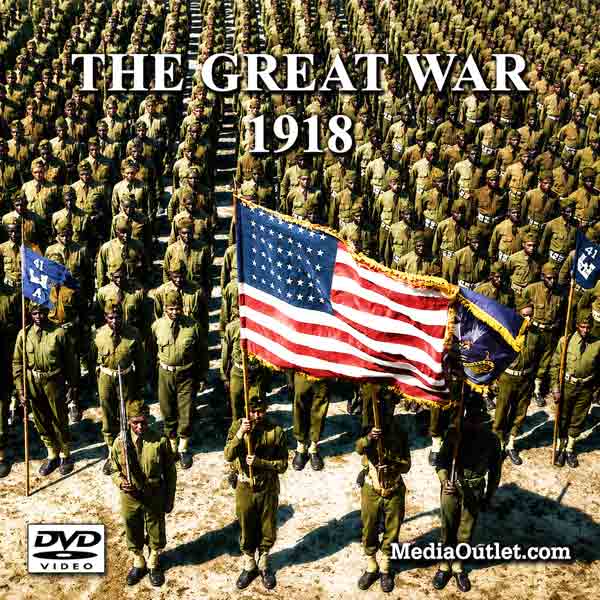
July 15, 1918: The European Civil War:
World War I: The First European War (The European Theater Of World
War I): The Western Front Of World War I: Battles Of The Marne:
The Second Battle Of The Marne (French: Seconde Bataille De La
Marne; July 15 - 18, 1918): The Fourth Battle Of Champagne
(French: 4e Bataille De Champagne): The Battle Of The Mountain Of
Reims (French: Bataille De La Montagne De Reims): -- German
General Erich Ludendorff launches Germany's fifth, and last, major
German offensive on the Western Front near the River Marne. The
attack failed when an Allied counterattack by American, British
and Italian divisions, supported by several hundred tanks,
overwhelmed the Germans on their right flank, inflicting severe
casualties. On July 18, General Foch, Commander-in-Chief of the
Allied troops, launched a massive counter-offensive. The German
defeat marked the start of the relentless Allied advance known as
The Hundred Days Offensive, which culminated in the Armistice with
Germany about 100 days later. Following the failure of the German
spring offensive to end the conflict, Erich Ludendorff, Chief
Quartermaster General, believed that an attack through Flanders
would give Germany a decisive victory over the British
Expeditionary Force (BEF). To shield his intentions and draw
Allied troops away from Belgium, Ludendorff planned for a large
diversionary attack along the Marne. The battle began on July 15,
when 23 German divisions of the First and Third armies - led by
Bruno von Mudra and Karl von Einem - assaulted the French Fourth
Army under Henri Gouraud east of Reims (the Fourth Battle of
Champagne (French: 4e Bataille de Champagne). The U.S. 42nd
Division was attached to the French Fourth Army. Meanwhile, 17
divisions of the German Seventh Army, under Max von Boehn, aided
by the Ninth Army under Johannes von Eben, attacked the French
Sixth Army led by Jean Degoutte to the west of Reims (the Battle
of the Mountain of Reims (French: Bataille de la Montagne de
Reims)). Ludendorff hoped to split the French in two. East of
Reims the French Fourth Army had prepared a defense in depth to
counter an intense bombardment and infiltrating infantry. Their
main line of resistance was four to five km behind the front,
beyond the range of the enemy field guns, it was a continuous
trench line - to prevent infiltration - dug on a reverse slope so
it could not be overlooked by enemy artillery observers on the
ground. Between the front and the main line of resistance were two
lines of strong points, again mostly on reverse slopes. The French
gun line behind the front was lightly manned, but the remaining
guns fired frequently, so the Germans did not detect its weakness
from rate of firing, although aerial observers did spot a
concentration of field guns behind the main line of resistance.
German offensive tactics stressed surprise, but French
intelligence based on aerial observation gave clear warning and
they learned the hour for the attack from twenty-seven prisoners
taken in a trench raid. The German bombardment was scheduled for
12:10. The French opened fire on the German assault trenches at
11:30, naturally shaking the confidence of attackers. When the
Germans opened fire they pounded the almost empty French front
line and their counter-battery fire struck many vacated gun pits.
The attackers moved easily through the French front and then were
led onward by a rolling barrage, which soon was well ahead of the
infantry because they were held up by the points of resistance.
When they encountered the French mainline they were ordered to
rest, regroup and wait until their field guns were moved into
range. They attacked the main line at 08:30 the following morning,
an hour after they had originally scheduled to attack. They were
stopped by accurate fire by the bulk of the French artillery. They
tried again at noon, but failed. A French counter-attack gained
little ground, but convinced the German commanders that they could
not prevail. The Fourth Army was now able to send reinforcements
to their neighbors to the west who had not fared as well. In the
west on the opening day of the offensive the defenders of the
south bank of the Marne had to hold the river bank by enduring an
intense three hour bombardment, including many gas shells. Under
this cover stormtroopers swarmed across the river in every sort of
transport - including 30-man canvas boats and rafts. They began to
erect skeleton bridges at 12 points under fire from the Allied
survivors. Some Allied units, particularly Colonel Ulysses G.
McAlexander's 38th Infantry Regiment of the American 3rd Infantry
Division, the "Rock of the Marne", held fast or even
counterattacked, but by evening, the Germans had captured a
bridgehead on either side of Dormans 4 mi (6.4 km) deep and 9 mi
(14 km) wide, despite the aerial intervention of 225 French
bombers, dropping 44 short tons (40 t) of bombs on the makeshift
bridges. Ludendorff regarded their advance as "the very
pinnacle of military victory". The French were reinforced by
the British XXII Corps and 85,000 American troops and the German
advance stalled on July 17, 1918. On Sale Until Midnight Tonight
PT!
https://store.earthstation1.com/the-great-war-1918-dvd-america-in-world-w1918.html
Today's
EarthStation1.com 15% (Or More!) Off Commemorative Memorial Title:
Wings Over The World: Aviation History Series + Bonus MP4 Or DVD
Set
Today, July 15, 2026
July 15, 1916: Aviation: The History Of
Aviation: The Aviation Industry: The History Of The Aviation
Industry: The Aerospace Industry: The History Of The Aerospace
Industry: Foundings: Business Foundings -- William Boeing and
George Conrad Westervelt incorporate Pacific Aero Products Co.
(later renamed Boeing Airplane Company) in Seattle, Washington.
The Boeing Company became an American multinational corporation
that designs, manufactures, and sells airplanes, rotorcraft,
rockets, satellites, and missiles worldwide. The company also
provides leasing and product support services. Boeing is among the
largest global aircraft manufacturers; it is the second-largest
defense contractor in the world based on 2015 revenue, and is the
largest exporter in the United States by dollar value. Boeing
stock is a component of the Dow Jones Industrial Average. While
the original Boeing was founded by William Boeing on July 15,
1916, the current Boeing is the result of merger of the original
Boeing with McDonnell Douglas in August 1997. Former Boeing's
chairman and CEO Philip M. Condit continued as the chairman and
CEO of the new Boeing, while Harry Stonecipher, former CEO of
McDonnell Douglas, became the president and chief operating
officer of the newly merged company. The Boeing Company has its
corporate headquarters in Chicago, Illinois and the company is led
by President and CEO Dennis Muilenburg. On Sale Until Midnight
Tonight PT!
https://store.earthstation1.com/wings-over-the-world-7-dvd-set-entire-aviation-tv-serie7.html
Today's
EarthStation1.com 15% (Or More!) Off Commemorative Memorial Title:
Outer Space Films 12: The Apollo-Soyuz Test Project DVD MP4 USB
Drive
Today, July 15, 2026
July 15, 1975: Rocket Launches: The
History Of Rocketry: The History Of Spaceflight: The Aftermath Of
World War II: The Cold War: The Space Age: The Space Race: Detente
(French, "Relaxation"): Human Spaceflight Programs:
Space Programs Of The United States: Project Apollo: Space
Programs Of The Soviet Union: The Soyuz Programme: The
Apollo-Soyuz Test Project (ASTP) (Russian: Eksperimentalniy Polyot
Soyuz-Apollon [EPAS], "Experimental Flight Soyuz-Apollo";
Soyuz-Apollo, Soyuz 19): -- The Apollo-Soyuz Test Project begins
with the dual launch of an American Apollo spacecraft and a Soviet
Soyuz spacecraft as part of the first joint Soviet-United States
human-crewed flight; Soyuz was launched first at 12:20:00 (UTC)
from Baikonour, Site 1/5 atop a Soyuz-U launch vehicle from the
Baikonur Cosmodrome's Gagarin's Start (Baikonur Site 1, Site 1/5)
launch site, and the Apollo was launched afterwards at 19:50:00
(UTC) atop a Saturn IB launch vehicle from the Kennedy Space
Center Launch Complex 39B ( (LC-39B) on Merritt Island, Florida.
The Apollo-Soyuz Test Project mission was a symbol of the
dipolomatic policy of detente, the easing of strained relations,
especially political relations) that the two superpowers were
pursuing at the time. It involved the docking of Apollo CSM-111,
an Apollo Command/Service Module, with the Soviet Soyuz 19. The
unnumbered Apollo vehicle was a surplus from the terminated Apollo
program and the last one to fly, and it was the last launch of an
American spacecraft by one the of the Saturn family of booster
rockets. This mission ceremoniously marked the end of the Space
Race that had begun in 1957 with the Sputnik launch. The mission
included both joint and separate scientific experiments (including
an engineered eclipse of the Sun by Apollo to allow Soyuz to take
photographs of the solar corona), and provided useful engineering
experience for future joint US-Russian space flights, such as the
Shuttle-Mir Program and the International Space Station. ASTP was
the last manned US space mission until the first Space Shuttle
flight in April 1981. It was also U.S. astronaut Donald "Deke"
Slayton's only space flight; he was chosen as one of the original
Mercury Seven astronauts in April 1959, but had been grounded
until 1972 due to Atrial fibrillation, an irregular heart rhythm,
a condition he claimed was cured by megadoses of vitamins,
particularly Vitamin C. The Astronauts of Apollo CSM-111 were
Thomas P. Stafford, Vance D. Brand and Donald K. Slayton; the
Cosmonauts of Soyuz 19 were Alexey Leonov and Valeri Kubasov. On
Sale Until Midnight Tonight PT!
https://store.earthstation1.com/outer-space-films-12-the-apollosoyuz-test-project-dvd-mp4-usb-dr124.html
Today's
EarthStation1.com 15% (Or More!) Off Commemorative Memorial Title:
The World: A Television History Documentary Series DVD, Download,
USB
Today, July 15, 2026
July 15, 1834: Religion: The History Of
Religion: Abrahamic Religions: Christianity: Roman Catholicism:
The Latin Church (Latin: Ecclesia Latina): The Spanish Inquisition
(Spanish: Inquisicion Espanola) (The Tribunal Of The Holy Office
Of The Inquisition (Spanish: Tribunal Del Santo Oficio De La
Inquisicion): -- The Spanish Inquisition, established in 1478 by
the Catholic Monarchs Ferdinand II Of Aragon and Isabella I of
Castile, is officially disbanded after nearly 356 years. It was
intended to maintain Catholic orthodoxy in their kingdoms and to
replace the Medieval Inquisition, which was under Papal control.
It became the most substantive of the three different
manifestations of the wider Catholic Inquisition along with the
Roman Inquisition and Portuguese Inquisition. The "Spanish
Inquisition" may be defined broadly, operating in Spain and
in all Spanish colonies and territories, which included the Canary
Islands, the Kingdom of Naples, and all Spanish possessions in
North, Central, and South America. According to modern estimates,
around 150,000 were prosecuted for various offenses during the
three-century duration of the Spanish Inquisition, out of which
between 3,000 and 5,000 were executed (Appox. 2.7% of all cases).
The Inquisition was originally intended primarily to identify
heretics among those who converted from Judaism and Islam to
Catholicism. The regulation of the faith of newly converted
Catholics was intensified after the royal decrees issued in 1492
and 1502 ordering Muslims and Jews to convert to Catholicism or
leave Castile. The Inquisition was not definitively abolished
until 1834, during the reign of Isabella II, after a period of
declining influence in the preceding century. The Spanish
Inquisition is often cited in popular literature and history as an
example of religious intolerance and repression. Some historians
have come to conclude that many of the charges levied against the
Inquisition are exaggerated and are a result of the Black Legend
produced by political and religious enemies of Spain, especially
England. The Black Legend (Spanish: La leyenda negra), or the
Spanish Black Legend, is a theorised historiographical tendency
consisting of anti-Spanish and anti-Catholic propaganda. Its
proponents believe that its roots date back to the 16th century,
when it was originally a political and psychological weapon that
was used by Spain's northern European rivals in order to demonize
the Spanish Empire, its people and culture, minimize Spanish
discoveries and achievements, and counter its influence and power
in world affairs. The assimilation of originally Dutch and English
16th century propaganda into mainstream history is theorised to
have fostered an anti-Hispanic bias among subsequent historians
along with a distorted view of the history of Spain, Latin
America, and other parts of the world. This 17th century
propaganda found its basis in real events during the Spanish
conquest the Americas, which did involve atrocities, but it often
employed lurid and exaggerated depictions of violence, while
ignoring similar behaviour by other powers. Although the existence
of a 16th- and 17th-century Spanish black legend is agreed upon by
the majority of scholars, aspects of the legend are still debated.
Charles Gibson described it as "The accumulated tradition of
propaganda and Hispanophobia according to which the Spanish Empire
is regarded as cruel, bigoted, degenerate, exploitative and
self-righteous in excess of reality". Like other black
legends, the Spanish black legend combined fabrications,
de-contextualization, exaggeration, cherry picking and double
standards with facts. There is disagreement among scholars over
whether a biased portrayal of Spanish history continues into the
present day, and the degree to which it might be significant if it
does. On Sale Until Midnight Tonight PT!
https://store.earthstation1.com/the-world-a-television-history-4-dual-layer-dvds-all-26-sh426.html
Today's
EarthStation1.com 15% (Or More!) Off Commemorative Memorial Title:
Hieroglyphic Travel Jean-Francois Champollion DVD, Download, USB
Drive
Today, July 15, 2026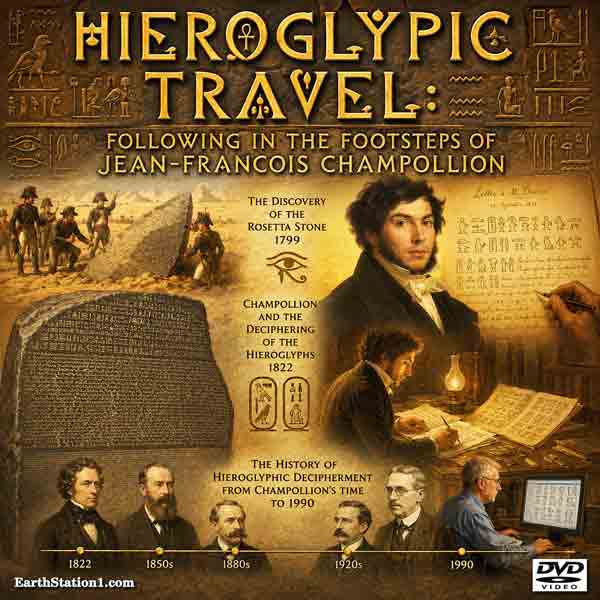
July 15, 1799: Archaelogy (Archeology):
Great Discoveries Of Archaeology: Ancient Egypt: Hellenistic
Egypt: The Ptolemaic Dynasty (The Lagid Dynasty, The Twenty-Third
Dynasty Of Egypt, Dynasty XXIII, 23rd Dynasty, Dynasty 23): The
Age Of Enlightenment (The Enlightenment, The Age Of Reason): The
Age Of Revolution: The Atlantic Revolutions: The French
Revolution: The French Revolutionary And Napoleonic Wars (The
Great French War) (The French Revolutionary Wars, The Napoleonic
Wars): The Napoleonic Wars: The Coalition Wars: The War Of The
Second Coalition: The French Campaign In Egypt And Syria:
Egyptology: Decipherment: The Decipherment Of Ancient Egyptian
Scripts: Egyptian Hieroglyphs: The Decipherment Of Egyptian
Hieroglyphs: The Rosetta Stone (The Rosetta Stone Decree, The
Decree Of Memphis) -- The Rosetta Stone is found in the Egyptian
village of Rosetta by French Captain Pierre-Francois Bouchard
during Napoleon's Egyptian Campaign. The Rosetta Stone is a
granodiorite stele, inscribed with three versions of a decree
issued at Memphis, Egypt dated March 27, 196 BC during the
Ptolemaic dynasty on behalf of King Ptolemy V. The top and middle
texts are in Ancient Egyptian using hieroglyphic script and
Demotic script, respectively, while the bottom is in Ancient
Greek. As the decree has only minor differences between the three
versions, the Rosetta Stone proved to be the key to deciphering
Egyptian hieroglyphs. The stone, carved in black granodiorite
during the Hellenistic period, is believed to have originally been
displayed within a temple, possibly at nearby Sais. It was
probably moved during the early Christian or medieval period, and
was eventually used as building material in the construction of
Fort Julien near the town of Rashid (Rosetta) in the Nile Delta.
It was rediscovered there in July 1799 by a French soldier named
Pierre-Francois Bouchard during the Napoleonic campaign in Egypt.
It was the first Ancient Egyptian bilingual text recovered in
modern times, and it aroused widespread public interest with its
potential to decipher this previously untranslated hieroglyphic
language. Lithographic copies and plaster casts began circulating
among European museums and scholars. Meanwhile, British troops
defeated the French in Egypt in 1801, and the original stone came
into British possession under the Capitulation of Alexandria and
was transported to London. It has been on public display at the
British Museum almost continuously since 1802, and is the
most-visited object there. Study of the decree was already under
way when the first full translation of the Greek text appeared in
1803. It was 20 years, however, before the transliteration of the
Egyptian scripts was announced by Jean-Francois Champollion in
Paris in 1822; it took longer still before scholars were able to
read Ancient Egyptian inscriptions and literature confidently.
Major advances in the decoding were recognition that the stone
offered three versions of the same text (1799); that the demotic
text used phonetic characters to spell foreign names (1802); that
the hieroglyphic text did so as well, and had pervasive
similarities to the demotic (Thomas Young, 1814); and that, in
addition to being used for foreign names, phonetic characters were
also used to spell native Egyptian words (Champollion, 1822-1824).
Ever since its rediscovery, the stone has been the focus of
nationalist rivalries, including its transfer from French to
British possession during the Napoleonic Wars, a long-running
dispute over the relative value of Young and Champollion's
contributions to the decipherment and, since 2003, demands for the
stone's return to Egypt. Two other fragmentary copies of the same
decree were discovered later, and several similar Egyptian
bilingual or trilingual inscriptions are now known, including two
slightly earlier Ptolemaic decrees (the Decree of Canopus in 238
BC, and the Memphis decree of Ptolemy IV, c. 218 BC). The Rosetta
Stone is, therefore, no longer unique, but it was the essential
key to modern understanding of Ancient Egyptian literature and
civilisation. The term Rosetta Stone is now used in other contexts
as the name for the essential clue to a new field of knowledge. On
Sale Until Midnight Tonight PT!
https://store.earthstation1.com/hieroglypic-travel-following-in-the-footsteps-of-jeanfrancois-champo.html
Today's
EarthStation1.com 15% (Or More!) Off Commemorative Memorial Title:
Napoleon's Last Battle: The Memorial Of Saint Helena MP4 Download
DVD
Today, July 15, 2026
July 15, 1815: The Age Of Enlightenment
(The Enlightenment, The Age Of Reason): The Age Of Revolution: The
Atlantic Revolutions: The French Revolution: The French
Revolutionary And Napoleonic Wars (The Great French War) (The
French Revolutionary Wars, The Napoleonic Wars): The Napoleonic
Wars: The Coalition Wars: The Hundred Days (The War Of The Seventh
Coalition): The Surrender Of Napoleon (1915): -- Napoleon's
military and political careers, and all the Napoleonic Wars, are
brought an end when Napoleon Bonaparte surrenders aboard HMS
Bellerophon on the sixteenth anniversary of the French discovery
of The Rosetta Stone during Napoleon's French Campaign In Egypt
And Syria of The War Of The Second Coalition. Napoleon's forces
had fought and lost to the Coalition armies, commanded by the Duke
of Wellington and Gebhard Leberecht von Blucher, at the Battle of
Waterloo on June 18, 1815. Napoleon returned to Paris and found
that both the legislature and the people had turned against him.
Realizing his position was untenable, he abdicated on June 22, in
favour of his son. He left Paris three days later and settled at
Josephine's former palace in Malmaison (on the western bank of the
Seine about 17 kilometres (11 mi) west of Paris). Even as Napoleon
travelled to Paris, the Coalition forces swept through France
(arriving in the vicinity of Paris on June 29), with the stated
intent of restoring Louis XVIII to the French throne. When
Napoleon heard that Prussian troops had orders to capture him dead
or alive, he fled to Rochefort, considering an escape to the
United States. British ships were blocking every port. Napoleon
demanded asylum from the British Captain Frederick Maitland on the
blockading HMS Bellerophon, "the ship that had dogged his
steps for twenty years" (according to maritime historian
David Cordingly) to finally surrender to the British on July 15.
HMS Bellerophon was a 74-gun third-rate (a classification ranking,
not a quality assessment) ship of the line (a 17th-19th century
naval warship, the largest and most powerful of their time,
constructed to take part in the naval tactic of "the line of
battle", where two columns of opposing warships manoeuvred to
bring the greatest firepower to bear) of the Royal Navy. Launched
in 1786, she served during the French Revolutionary and Napoleonic
Wars, mostly on blockades or convoy escort duties. Known to
sailors as the "Billy Ruffian", she fought in three
fleet actions, the Glorious First of June, the Battle of the Nile
and the Battle Of Trafalgar, and was the ship aboard which
Napoleon finally surrendered, ending 22 years of nearly continuous
war with France. It was Bellerophon's last seagoing service. She
was paid off and converted to a prison ship in 1815, and was
renamed Captivity in 1824 to free the name for another ship. Moved
to Plymouth in 1826, she continued in service until 1834, when the
last convicts left. The Admiralty ordered her to be sold in 1836,
and she was broken up. Bellerophon's long and distinguished career
has been recorded in literature and folk songs, commemorating the
achievements of the "Billy Ruffian". On Sale Until
Midnight Tonight PT!
https://store.earthstation1.com/napoleon39s-last-battle-the-memorial-of-saint-helena-mp4-download-394.html
Today's
EarthStation1.com 15% (Or More!) Off Commemorative Memorial Title:
The Temple In Jerusalem & The Ark Of The Covenant MP4 Download
DVD
Today, July 15, 2026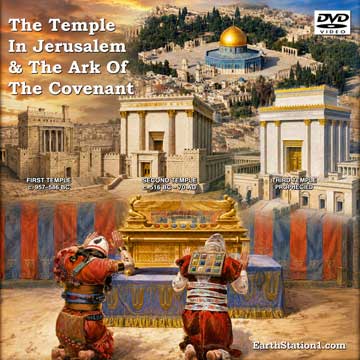
July 15, 70: Jerusalem: The History Of
Jerusalem: Religion: The History Of Religion: Abrahamic Religions:
Judaism: The History Of Judaism: The History Of Israel: Judaea:
The History Of Judaea: The Jewish-Roman Wars: The First
Jewish-Roman War (The Great Jewish Revolt (Hebrew: Ha-Mered
Ha-Gadol), The Jewish War): Sieges Of Jerusalem: The Siege Of
Jerusalem (70 CE) (Sieges Of Jerusalem: The Siege Of Jerusalem):
-- Titus, son of the Roman Emperor Vespasian, and his armies
breach the walls of Jerusalem. On July 20, they storm the Fortress
Of Antonia, a citadel built by Herod the Great and named for
Herod's patron Mark Antony as a fortress whose chief function was
to protect the Second Temple, the eastern end of the so-called
Second Wall at the north-western corner of the Temple Mount; in
response, the Zealots draw the Roman army into street fights.
Titus began his siege a few days before Passover, on 14 Xanthicus
(April), surrounding the city with three legions (V Macedonica,
XII Fulminata, XV Apollinaris) on the western side and a fourth (X
Fretensis) on the Mount of Olives, to the east. If the reference
in his Jewish War at 6:421 is to Titus's siege, though
difficulties exist with its interpretation, then at the time,
according to Josephus, Jerusalem was thronged with many people who
had come to celebrate Passover. The thrust of the siege began in
the west at the Third Wall, north of the Jaffa Gate. By May, this
was breached and the Second Wall also was taken shortly
afterwards, leaving the defenders in possession of the Temple and
the upper and lower city. The Jewish defenders were split into
factions. Simon Bar Giora and John of Giscala, the two prominent
Zealot leaders, placed all blame for the failure of the revolt on
the shoulders of the moderate leadership. John of Gischala's group
murdered another faction leader, Eleazar ben Simon, whose men were
entrenched in the forecourts of the Temple. The Zealots resolved
to prevent the city from falling into Roman hands by all means
necessary, including the murder of political opponents and anyone
standing in their way. There were still those wishing to negotiate
with the Romans and bring a peaceful end to the siege. The most
prominent of these was Yohanan ben Zakkai, whose students smuggled
him out of the city in a coffin in order to deal with Vespasian.
This, however, was insufficient to deal with the madness that had
now gripped the Zealot leadership in Jerusalem and the reign of
terror it unleashed upon the population of the city. Josephus
describes various acts of savagery committed against the people by
its own leadership, including the torching of the city's food
supply in an apparent bid to force the defenders to fight for
their lives. The enmities between John of Gischala and Simon bar
Giora were papered over only when the Roman siege engineers began
to erect ramparts. Titus then had a wall built to girdle the city
in order to starve out the population more effectively. After
several failed attempts to breach or scale the walls of the
Fortress of Antonia, the Romans finally launched a secret attack.
Despite early successes in repelling the Roman sieges, the Zealots
fought amongst themselves, and they lacked proper leadership,
resulting in poor discipline, training, and preparation for the
battles that were to follow. At one point they destroyed the food
stocks in the city, a drastic measure thought to have been
undertaken perhaps in order to enlist a merciful God's
intervention on behalf of the besieged Jews, or as a stratagem to
make the defenders more desperate, supposing that was necessary in
order to repel the Roman army. According to Josephus, when the
Romans reached Antonia they tried to destroy the wall which
protected it. They removed four stones only, but during the night
the wall collapsed. "That night the wall was so shaken by the
battering rams in that place where John had used his stratagem
before, and had undermined their banks, that the ground then gave
way, and the wall fell down suddenly." Following this, Titus
had raised banks beside the court of the Temple: on the north-west
corner, on the north side, and on the west side. Josephus goes on
to say that the Jews then attacked the Romans on the east, near
the Mount of Olives, but Titus drove them back to the valley.
Zealots set the north-west colonnade on fire. The Romans set the
next one on fire, and the Jews wanted it to burn, and they also
trapped some Roman soldiers when they wanted to climb over the
wall. They had burned wood under the wall when Romans were trapped
on it. After Jewish allies killed a number of Roman soldiers,
Josephus claims that Titus sent him to negotiate with the
defenders; this ended with Jews wounding the negotiator Josephus
with an arrow, and another sally was launched shortly after. Titus
was almost captured during this sudden attack, but escaped.
Overlooking the Temple compound, the fortress provided a perfect
point from which to attack the Temple itself. Battering rams made
little progress, but the fighting itself eventually set the walls
on fire. The Siege Of Jerusalem in the year 70 CE was the decisive
event of the First Jewish-Roman War. The Roman army, led by the
future Emperor Titus, with Tiberius Julius Alexander as his
second-in-command, besieged and conquered the city of Jerusalem,
which had been controlled by Judean rebel factions since 66 CE,
following the Jerusalem riots of 66, when the Judean Free
Government was formed in Jerusalem. The siege ended on August 30,
70 CE with the burning and destruction of its Second Temple, and
the Romans entered and sacked the Lower City. The destruction of
both the first and second temples is still mourned annually as the
Jewish fast Tisha B'Av. The Arch of Titus, celebrating the Roman
sack of Jerusalem and the Temple, still stands in Rome. The
conquest of the city was complete on September 8, 70 CE. On Sale
Until Midnight Tonight PT!
https://store.earthstation1.com/teinjearkofc.html
Today's
EarthStation1.com 15% (Or More!) Off Commemorative Memorial Title:
Crusade: The First Crusade's History And Trail DVD, MP4, USB Drive
Today, July 15, 2026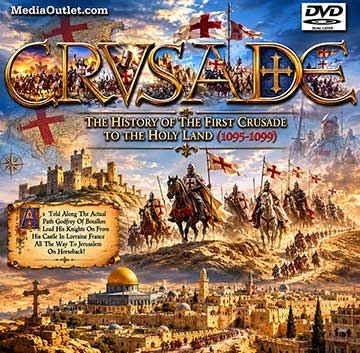
July 15, 1099: Religion: The History Of
Religion: Abrahamic Religions: Christianity: The History Of Roman
Catholicism: The Latin Church (Latin: Ecclesia Latina): The Middle
Ages (The Medieval Period, The Mediaeval Period): The Crusades:
The First Crusade (1096-1099): Sieges Of Jerusalem: The Siege Of
Jerusalem (1099): -- Christian soldiers take The Church Of The
Holy Sepulchre (The Church Of The Resurrection, The Basilica Of
The Holy Sepulchre, The Holy Sepulchre (Eastern Orthodox
Christianity: The Church Of The Resurrection, The Church Of The
Anastasis (Greek:Anastasis, "Resurrection"), the
fourth-century church in the Christian Quarter of the Old City of
Jerusalem, after the final assault of The Siege Of Jerusalem Of
1099. On June 7 prior, the siege began and continued five weeks
till July 15, 1099. The climax of the First Crusade, the
successful siege saw the Crusaders take Jerusalem from the Fatimid
Caliphate, a Shia Islamic state under a caliph that claimed
descent from Fatimah, daugher of the prophet Muhammad, and spanned
a large area of North Africa, Sicily, the Levant, and Hijaz (the
Arabian Penisula). This crusader victory laid the foundations for
the Kingdom of Jerusalem, a crusader state established in the
Southern Levant by Godfrey of Bouillon. The kingdom lasted nearly
two hundred years, from 1099 until 1291 when the last remaining
possession, Acre, was destroyed by the Mamluks. The First Kingdom
of Jerusalem lasted from 1099 to 1187, when it was almost entirely
overrun by Saladin. After the subsequent Third Crusade, the
kingdom was re-established in Acre in 1192, and lasted until that
city's destruction in 1291, except for the two decades after
Frederick II of Hohenstaufen reclaimed Jerusalem, placing it back
in Christian hands after the Sixth Crusade. Most of the crusaders
who settled there were of French origin. On Sale Until Midnight
Tonight PT!
https://store.earthstation1.com/crusade-dvd-the-first-crusade-history-and-trail-dvd-mp4-us4.html
Today's
EarthStation1.com 15% (Or More!) Off Commemorative Memorial Title:
Timeline Middle Ages TV Newscast Series + Bonus MP4 Video Download
DVD
Today, July 15, 2026
July 15, 1149: Religion: The History Of
Religion: Abrahamic Religions: Christianity: The History Of Roman
Catholicism: The Latin Church (Latin: Ecclesia Latina): The Middle
Ages (The Medieval Period, The Mediaeval Period): The Crusades:
The First Crusade (1096-1099): The Kingdom Of Jerusalem (The Latin
Kingdom) (1099-1187 / 1192-1291): The Church Of The Holy Sepulchre
(The Church Of The Resurrection): -- The reconstructed Church Of
The Holy Sepulchre -- the holiest site in Christianity in the
world and the most important pilgrimage site for Christians since
the fourth century, which according to tradition dating to that
time contains both the site where Jesus was crucified at Calvary
(Golgotha) and the location of Jesus' empty tomb where he was
buried and resurrected -- is reconsecrated in Jerusalem during the
reign of Melisende, Queen of Jerusalem, its renovations unifying
the small chapels on the site and placing all the holy places
under one roof for the first time. The church was named either for
the Resurrection of Jesus, or for his tomb, which is at its focal
point. Both locations are considered immensely holy sites by
Christians. Prelate and chronicler of the Crusader Kingdom of
Jerusalem, William Of Tyre (c. 1130 - September 29, 1186),
reported on the rebuilding of the church in the mid-12th century.
The Crusaders refurnished the church in Romanesque style and added
a bell tower. The church became the seat of the first Latin
patriarchs and the site of the kingdom's scriptorium (a writing
room in monasteries for the copying and illuminating of
manuscripts by scribes). Eight 11th- and 12th-century Crusader
leaders (Godfrey, Baldwin I, Baldwin II, Fulk, Baldwin III,
Amalric, Baldwin IV and Baldwin V - the first eight rulers of the
Kingdom of Jerusalem) were buried in the south transept and inside
the Chapel of Adam. The royal tombs were looted during The Siege
Of Jerusalem Of 1244 by the Persianate, Sunni Muslim empire of
Turkic mamluk armies of Khwarazmian Empire, but the tombs probably
remained mostly intact until 1808 when a fire damaged the church.
The tombs may have been destroyed by the fire, or during
renovations by the Greek Orthodox custodians of the church in
1809-1810. The remains of the kings may still be in unmarked pits
under the church's pavement. The church was lost to Saladin, along
with the rest of the city, in 1187, although the treaty
established after the Third Crusade allowed Christian pilgrims to
visit the site. Emperor Frederick II (r. 1220-50) regained the
city and the church by treaty in the 13th century while under a
ban of excommunication, with the consequence that the holiest
church in Christianity was laid under interdict. The church seems
to have been largely in the hands of Greek Orthodox patriarch
Athanasius II of Jerusalem (c. 1231-47) during the last period of
Latin control over Jerusalem. Both city and church were captured
by the Khwarezmians in 1244. In earlier times, the site was used
as a Jewish burial ground, upon which a pagan temple was built.
The church and rotunda was built under Constantine in the 4th
century and destroyed by al-Hakim in 1009. Al-Hakim's son allowed
Emperor Constantine IX Monomachos to reconstruct the church, which
was completed in 1048. After it was captured by the Crusaders in
1099, it continued to undergo modifications, resulting in a
significant departure from the original structure. Several
renovations and restorations were made under the Ottomans. The
tomb itself is enclosed by a 19th-century shrine called the
Aedicule. Within the church proper are the last four stations of
the Cross of the Via Dolorosa, representing the final episodes of
the Passion of Jesus. The church has been a major Christian
pilgrimage destination since its creation in the fourth century,
as the traditional site of the resurrection of Christ, thus its
original Greek name, Church of the Anastasis ('Resurrection'). The
Status Quo, an understanding between religious communities dating
to 1757, applies to the site. Control of the church itself is
shared among several Christian denominations and secular entities
in complicated arrangements essentially unchanged for over 160
years, and some for much longer. The main denominations sharing
property over parts of the church are the Roman Catholic, Greek
Orthodox, Armenian Apostolic, Coptic, Syriac, and Ethiopian
Orthodox churches. On Sale Until Midnight Tonight PT!
https://store.earthstation1.com/timeline-tv-series-on-the-middle-ages-in-tv-newscast-format-2-dvd-se2.html
Today's
EarthStation1.com 15% (Or More!) Off Commemorative Memorial Title:
When Hell Was In Session Jeremiah Denton Vietnam POW DVD Download
USB
Today, July 15, 2026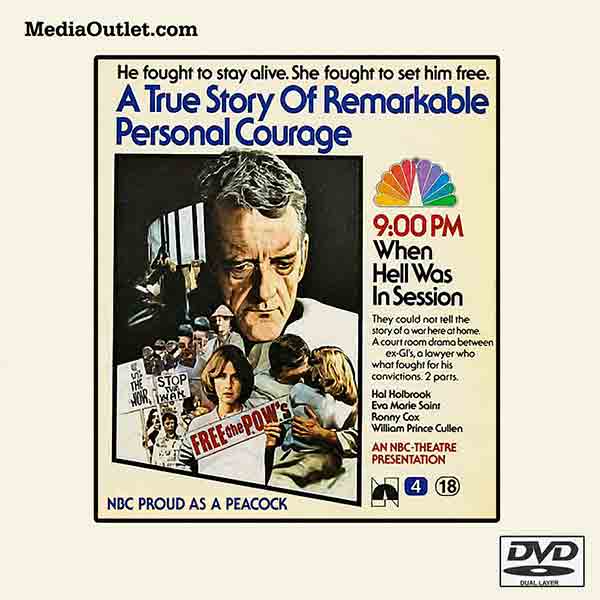
July 15, 1924: #BOTD: #HBD! Jeremiah
Denton, American politician, United States Navy Rear Admiral and
naval aviator, who served as a U.S. Senator representing Alabama
from 1981 to 1987, widely known for enduring almost eight years of
grueling conditions as an American prisoner of war (POW) in North
Vietnam after the A-6 Intruder he was piloting was shot down in
1965 (d. March 28, 2014) is #born Jeremiah Andrew Denton Jr. in
Mobile, Alabama. He was the first of all American POWs held
captive and released by Hanoi to step off an American plane during
Operation Homecoming in February 1973. As one of the earliest and
highest-ranking officers to be taken prisoner in North Vietnam,
Denton was forced by his captors to participate in a 1966
televised propaganda interview which was broadcast in the United
States. While answering questions and feigning trouble with the
blinding television lights, Denton blinked his eyes in Morse code,
spelling the word "T-O-R-T-U-R-E"-and confirming for the
first time to U.S. Naval Intelligence that American POWs were
being tortured. In 1976, Denton wrote When Hell Was In Session
about his experience in captivity, which was made into the 1979
film with Hal Holbrook. Denton was also the subject of the 2015
documentary Jeremiah produced by Alabama Public Television. In
1980, Denton was elected to the U.S. Senate, where he focused
mainly on family issues and national security, helping pass the
Adolescent Family Life Act (the so-called "Chastity Bill")
in 1981 and heading the Judiciary Subcommittee on Security and
Terrorism. Jeremiah Denton died of complications from a heart
ailment at a hospice in Virginia Beach at age 89. He is buried at
Arlington National Cemetery with his wife Jane. On Sale Until
Midnight Tonight PT!
https://store.earthstation1.com/when-hell-was-in-session-dvd-pow-jeremiah-denton-vietnam-war.html
Today's
EarthStation1.com 15% (Or More!) Off Commemorative Memorial Title:
Haiti: Killing The Dream 1991 Haitian Coup + Bonus MP4 Download
DVD
Today, July 15, 2026
July 15, 1953: #BOTD: Jean-Bertrand
Aristide, Haitian former Salesian priest and politician who became
Haiti's first democratically elected president, is #born into
poverty in Port-Salut, Sud in southern Haiti. A proponent of
liberation theology, Aristide was appointed to a parish in
Port-au-Prince in 1982 after completing his studies to become a
priest. He became a focal point for the pro-democracy movement
first under Jean-Claude "Baby Doc" Duvalier and then
under the military transition regime which followed. He won the
1990-91 Haitian general election, with 67% of the vote. As a
priest, he taught liberation theology and, as a president, he
attempted to normalize Afro-Creole culture, including Vodou
religion, in Haiti. Aristide was briefly president of Haiti, until
a September 1991 military coup. The coup regime collapsed in 1994
under U.S. pressure and threat of force (Operation Uphold
Democracy), and Aristide was president again from 1994 to 1996 and
from 2001 to 2004. He was ousted in the 2004 coup d'etat after
right-wing ex-army paramilitary units invaded the country from
across the Dominican border. Aristide and many others have alleged
that the United States had a role in orchestrating the coup
against him. In 2022, numerous Haitian and French officials told
The New York Times that France and the United States had
effectively overthrown Aristide by pressuring him to step down,
however this was denied by James Brendan Foley, U.S. Ambassador to
Haiti at the time of the coup. He was later forced into exile in
the Central African Republic and South Africa. He finally returned
to Haiti in 2011 after seven years in exile. On Sale Until
Midnight Tonight PT!
https://store.earthstation1.com/haiti-killing-the-dream-the-1991-haitian-coup-dvd-download1991.html
Today's
EarthStation1.com 15% (Or More!) Off Commemorative Memorial Title:
The Yellowstone Fires Of 1988 Documentary DVD, Download, USB Drive
Today, July 15, 2026
July 15, 1988: Natural Disasters: Natural
Disasters In The United States: Fires: Conflagrations:
Conflagrations In The United States: Wildfires (Forest Fires,
Bushfires, Brushfires, Wildland Fires, Rural Fires): The
Yellowstone Fires Of 1988: -- The National Park Service's
Prescribed Natural Fire Policy of allowing natural fires in
Yellowstone to burn under controlled conditions is halted in
reaction to the spread of the Yellowstone Fires. The Yellowstone
Fires Of 1988 (June 14 - November 18, 1988) started as many
smaller individual fires. The flames quickly spread out of control
due to drought conditions and increasing winds, combining into one
large conflagration which burned for several months. The fires
almost destroyed two major visitor destinations and, on September
8, 1988, the entire park closed to all non-emergency personnel for
the first time in its history. Only the arrival of cool and moist
weather in the late autumn brought the fires to an end. A total of
793,880 acres (3,213 km2), or 36 percent of the park, was affected
by the wildfires. Thousands of firefighters fought the fires,
assisted by dozens of helicopters and fixed-wing aircraft which
were used for water and fire retardant drops. At the peak of the
effort, more than 9,000 firefighters were assigned to the park.
With fires raging throughout the Greater Yellowstone Ecosystem and
other areas in the western United States, the staffing levels of
the National Park Service and other land management agencies were
inadequate for the situation; more than 4,000 U.S. military
personnel were soon brought in to assist in wildfire suppression
efforts. The firefighting effort cost 120M USD (260M USD in 2021).
Losses to structures were minimized by concentrating firefighting
efforts near major visitor areas, keeping property damage down to
3M USD (7M USD as of 2021). No firefighters died while fighting
the Yellowstone fires, though there were two fire-related deaths
outside the park. Before the late 1960s, fires were generally
believed to be detrimental for parks and forests, and management
policies were aimed at suppressing fires as quickly as possible.
However, as the beneficial ecological role of fire became better
understood in the decades before 1988, a policy was adopted of
allowing natural fires to burn under controlled conditions, which
proved highly successful in reducing the area lost annually to
wildfires. The unprecedented nature of the fires led to many
questions about existing fire management policies. Media accounts
of mismanagement were often sensational and inaccurate, sometimes
wrongly reporting or implying that most of the park was being
destroyed. While there were temporary declines in air quality
during the fires, no adverse long-term health effects have been
recorded in the ecosystem and, contrary to initial reports, few
large mammals were killed by the fires, though there was a
subsequent reduction in the number of moose which has yet to
rebound. On Sale Until Midnight Tonight PT!
https://store.earthstation1.com/the-yellowstone-fires-of-1988-documentary1988.html
Today's
EarthStation1.com 15% (Or More!) Off Commemorative Memorial Title:
The Mostly Mozart Festival Orchestra 1990 DVD, Download, Flash
Drive
Today, July 15, 2026
July 15, 1962: Aesthetics: Performing
Arts: Premieres: Radio Premieres: American Radio Premieres: --
WQXR-FM debuts as WCOM at 105.9 MHz on the FM dial. After a long
series of name and frequency changes, it is now known as of 2023
as WQXR-FM, and is back at its frequency of 105.9 MHz. WQXR-FM
(105.9 FM) is an American non-commercial classical radio station,
licensed to Newark, New Jersey and serving the North Jersey and
New York City area. It is owned by the nonprofit organization New
York Public Radio, which also operates WNYC AM and FM and the
four-station New Jersey Public Radio group. WQXR-FM broadcasts
from studios and offices located in the Hudson Square neighborhood
in lower Manhattan - across the hall from WNYC-FM and AM - and its
transmitter is located at the Empire State Building. WQXR-FM is
the outgrowth of a "high-fidelity" AM station, WQXR,
founded as the historically important experimental radio station
W2XR by John V. L. Hogan and Elliott Sanger. It began operating in
New York City on March 26, 1929 as a mechanical television
station. In conjunction with the television transmissions, the
station commonly broadcast classical music. In 1936 this station
was converted into a standard AM broadcast station, licensed to
New York City, with the call letters WQXR. As such, the current
WQXR-FM is the third incarnation of the station; the two prior
incarnations of these stations were commercial operations,
broadcasting classical music and known as "the radio station
of The New York Times". New York Public Radio acquired the
WQXR-FM branding on July 14, 2009, as part of a three-way trade
which also involved The New York Times Company-the previous owners
of WQXR-FM-and Univision Radio. As a result of the deal, WQXR-FM
became a non-commercial public radio station on a new FM
frequency, now operated by New York Public Radio. Financial
support includes three on-air pledge drives a year. WQXR-FM's main
programming is also carried by translator station W279AJ, 103.7 FM
in Highland, New York, simulcast on WNYC-FM's 93.9 FM HD2
subchannel, and carried over Time Warner Cable television channel
590 in the Hudson Valley, New York. On July 29, 2013, programming
began to be simulcast on the former WDFH, now WQXW, 90.3 FM in
Ossining, New York, covering northern and central Westchester
County. WQXR-FM's standard programming is streamed on its webcast.
Additional programming includes New Sounds Radio, focusing on
classical works by living composers, which is both streamed and
broadcast over WQXR-FM's HD2 subchannel. A streaming-only channel,
Operavore, dedicated to opera music, was launched in 2012. On Sale
Until Midnight Tonight PT!
https://store.earthstation1.com/mostly-mozart-festival-orchestra-avery-fisher-hall-19901990.html
Today's
EarthStation1.com 15% (Or More!) Off Commemorative Memorial Title:
Rock! UK: British Invasion Rock Documentary DVD, Download, Flash
Drive
Today, July 15, 2026
July 15, 1947: #BOTD: #HBD! Peter Banks,
English guitarist, vocalist, songwriter, producer and pioneer of
progressive rock music, best known as the original guitarist in
the rock bands The Syn, Yes, Flash, and Empire, designer of the
first Yes logo and naming the band Yes (d. March 7, 2013) is #born
Peter William Brockbanks in Chipping Barnet in north London,
England. Banks started as rhythm guitarist in the Nighthawks, a
local group, in 1963. His first gig took place at the New Barnet
Pop Festival. In the following year he left to join the Devil's
Disciples with John Tite on vocals, Ray Alford on bass, and
Malcolm "Pinnie" Raye on drums. They recorded two covers
on an acetate, Arthur Alexander's "You Better Move On"
and Graham Gouldman's "For Your Love", which became a
hit record for the Yardbirds one year later. It was Banks' first
visit in a recording studio, during which he wore headphones and
experienced stereo sound for the first time. He found the
experience "totally terrifying", and was so traumatised
that he started having doubts if he could carry on playing the
guitar and work in another studio again. In 1965 Banks joined the
Syndicats, replacing guitarist Ray Fenwick. After leaving the
Syndicats, Banks joined the Syn which at the time included Chris
Squire on bass, Andrew Pryce Jackman on keyboards, Steve Nardelli
on vocals, and Gunnar Hakonarson on drums. They recorded two
singles, "Created by Clive"/"Grounded" and
"Flowerman"/"14 Hour Technicolour Dream", both
in 1967, before they split. Later that year, Banks and Squire
joined Mabel Greer's Toyshop with Clive Bayley on rhythm guitar
and vocals and Bob Hagger on drums. In the spring of 1968 Banks
left the band to join Neat Change, with whom he recorded one
single, "I Lied to Aunty May". He was fired from the
band after his bandmates wanted to adopt a skinhead look, and
Banks refused to cut his hair. Meanwhile, Jon Anderson had joined
Mabel Greer's Toyshop as lead vocalist, and Hagger was replaced by
drummer Bill Bruford. The four entered a period of rehearsals in
London, during which Banks replaced a departing Bayley and
keyboardist Tony Kaye was brought in to round out the group. While
rehearsing with the new line-up, the band exchanged ideas for a
name. Anderson suggested Life and Squire proposed World, but all
agreed on Banks' suggestion of Yes, which he had thought of some
time before. Following their debut in August 1968 Banks devised
the band's first logo, a design featuring the group's name inside
a speech bubble. Banks performed on the first two Yes albums, Yes
(1969) and Time and a Word (1970). The latter features orchestral
arrangements which Banks disagreed with, and he often clashed with
producer Tony Colton. On April 18, 1970, Banks was fired from Yes
after their gig at the Luton College of Technology, and was
replaced by former Syndicats guitarist Steve Howe. In his
autobiography, Howe wrote that Banks "was an interesting
guitarist to have to follow. He, too, adopted different guitar
styles and had already set a scene I could relate to. He was a
sweet guy and came to many of our early gigs. I can't think of
many other ex-band members doing that - I mean, right after
they've left the band." Banks' first marriage was to American
singer and musician Sidonie Jordan (known as Sidney Foxx). They
first met in 1974 and co-formed Empire, and divorced in 1985.
Banks moved to Los Angeles, California in 1976. In 1996, Banks
left the US for his childhood home in Barnet, north London, to
care for his ailing father. In 1999, he married Peruvian-born
Cecilia Quino Rutte. Although Banks found married life "fantastic"
at one point, his second marriage ended in a divorce by the early
2000s due to the effects of his medication to treat his
depression, which his friends said made him difficult to live
with. A longtime friend said he also went through seasonal "dark"
periods around February and March. In 2011, Banks was hospitalised
with a case of septicaemia, likely caused from an infected tooth
due to dental neglect. He also caught Legionnaires' disease.
During this time his doctors discovered a cancerous tumour. Banks
died in his rented flat where he grew up in Chipping Barnet,
London, aged 65. He failed to turn up for a scheduled recording
session, and a concerned friend had medical staff break into his
home, where his body was discovered. The coroner declared that he
died from heart failure. His former business partner and manager
George Mizer, who he first met in the 1970s, organised Banks'
posthumous business affairs, and discovered that Banks' body was
unclaimed in the local mortuary. As Banks had no children or a
will, Mizer reached out to Quino, who gave the required approval
for the body to be released. There was no money to pay for a
funeral or wake, so Mizer setup an online fund for fans to
contribute. Banks was cremated, after which several friends and
associates, including David Cross of King Crimson and original Yes
manager Roy Flynn, met for a memorial drink in Denmark Street.
Mizer kept the ashes, and sprinkled some in areas that meant
something to Banks. On Sale Until Midnight Tonight PT!
https://store.earthstation1.com/rock-uk-british-invasion-rock-1960s119601980.html
Today's
EarthStation1.com 15% (Or More!) Off Commemorative Memorial Title:
I Want My Music TV! 1980s Music Television Videos MP4 Download DVD
Set
Today, July 15, 2026
July 15, 1949: #BOTD: #HBD! Trevor Horn,
English singer-songwriter, keyboardist, bassist and producer is
#born Trevor Charles Horn. His influence on 1980s popular music
was such that he has been called "The Man Who Invented the
Eighties". He is best known for his production work during
the 1980s and, before that, being one half of the new wave band
the Buggles (with Geoff Downes). Horn took up the bass guitar at
an early age and taught himself the instrument and to sight-read
music. In the 1970s, he worked as a session musician, built his
own studio, and wrote and produced singles for various artists.
Horn and Downes gained international fame in 1979 with the
Buggles' hit single "Video Killed the Radio Star", which
was the first music video played on the premiere broadast of MTV.
This was followed by their one-year tenure with the progressive
rock band Yes, with Horn becoming their lead singer. In 1981, Horn
became a full-time producer, working on commercially successful
songs and albums for numerous artists, among them Dollar, ABC,
Malcolm McLaren, Yes, and Frankie Goes to Hollywood. He ventured
into business with his wife Jill Sinclair, purchasing SARM West
Studios and establishing the publishers Perfect Songs and their
own label, ZTT Records. In the following year, Horn co-formed the
electronic group Art of Noise. In the 1990s, Horn's success
continued with his association with Seal. He has been a member of
the supergroup Producers, later known as the Trevor Horn Band,
since 2006. Horn has won numerous awards, including three Brit
Awards for Best British Producer in 1983, 1985, and 1992. He won a
Grammy Award for producing Seal's 1994 hit "Kiss from a
Rose". In 2010, Horn received an Ivor Novello Award for
Outstanding Contribution to British Music. On Sale Until Midnight
Tonight PT!
https://store.earthstation1.com/i-want-my-music-tv-dvd-late-1980s-vi1980.html
Today's
EarthStation1.com 15% (Or More!) Off Commemorative Memorial Title:
Rock & Roll An Unruly History 10 Part TV Series MP4 Video
Download DVD
Today, July 15, 2026
July 15, 1952: #BOTD: #HBD! Marky Ramone,
American drummer and songwriter, best known as the drummer for
Richard Hell And The Voidoids and The Ramones, is #born Marc
Steven Bell along with his twin brother Fred were born at The New
York Infirmary For Indigent Women and Children. He is of Dutch
ancestry on his father's side and of French and German ancestry on
his mother's side. He began playing in hard rock bands in the New
York City area, notably Dust and Estus. He was asked to drum for
punk rock band Richard Hell and the Voidoids. He replaced drummer
Tommy Ramone in the Ramones in 1978, and went by the stage name
Marky Ramone from then on. He has also played drums for other punk
rock and heavy metal bands, including his own band Marky Ramone
and the Intruders. He continues to keep the Ramones legacy alive
around the world with his band Marky Ramone's Blitzkrieg. Ramone
lives in Brooklyn Heights with his wife, Marion Flynn. In 2015, he
released his autobiography Punk Rock Blitzkrieg: My Life as a
Ramone. On Sale Until Midnight Tonight PT!
https://store.earthstation1.com/rock-amp-roll-an-unruly-history-10-part-tv-series-mp4-video-download-104.html
Today's
EarthStation1.com 15% (Or More!) Off Commemorative Memorial Title:
John Cleese's First Farewell Performance (1988) MP4 Video Download
DVD
Today, July 15, 2026
July 15, 1988: Aesthetics: Performing
Arts: Premieres: Film Premieres: American Film Premieres: -- A
Fish Called Wanda, a heist comedy film directed by Charles
Crichton and written by Crichton and John Cleese, is released
theatrically in the United States by Metro-Goldwyn-Mayer; it had
made is World Premiere in New York City on July 7, 1988, and in
Los Angeles on July 13, 1988. Six weeks after its theatrical
release, it reached number one at the box office there. It
eventually grossed 62.5M USD in the United States and Canada,
becoming the highest-grossing British film of all time with a
gross of 12 million PS. Outside of the US (including the UK), it
grossed 126.1M USD, for a worldwide total of 188.6M USD. It was
the number one rental video in the US in 1989. A Fish Called Wanda
stars Cleese, Jamie Lee Curtis, Kevin Kline, and Michael Palin.
The film follows a gang of diamond thieves who double-cross one
another to recover stolen diamonds hidden by their jailed leader.
His barrister becomes a central figure - and jealousies rage - as
femme fatale Wanda seduces him to locate the loot. It received
three nominations at the 61st Academy Awards: Best Director, Best
Original Screenplay, and Best Supporting Actor for Kline, which
he'd go on to win. A spiritual sequel, Fierce Creatures, was
released in 1997. The British Film Institute ranked A Fish Called
Wanda the 39th-greatest British film of the 20th century. During
the initial run of the film, a Danish audiologist named Ole
Bentzen died while laughing during a screening, which led
newspapers to report that he had died from laughter. The official
cause of death was heart fibrillation, which may have been caused
by an increased heart rate due to extended laughter. Cleese
considered using the event for publicity, but ultimately decided
it was in too bad taste. On Sale Until Midnight Tonight PT!
https://store.earthstation1.com/john-cleeses-first-farewell-performance-1988-mp4-video-download-dvd.html
Today's
EarthStation1.com 15% (Or More!) Off Commemorative Memorial Title:
FM 1978 Michael Brandon Eileen Brennan Martin Mull DVD, Download,
USB
Today, July 15, 2026
July 15, 1946: #BOTD: #HBD! Linda
Ronstadt, American singer, songwriter, record producer, actress
and beauty who performed and recorded in diverse genres including
rock, country, light opera, and Latin is #born Linda Maria
Ronstadt in Tucson, Arizona. She has earned 10 Grammy Awards,
three American Music Awards, two Academy of Country Music awards,
an Emmy Award, and an ALMA Award. Many of her albums have been
certified gold, platinum or multiplatinum in the United States and
internationally. She has also earned nominations for a Tony Award
and a Golden Globe award. She was awarded the Latin Grammy
Lifetime Achievement Award by the Latin Recording Academy in 2011
and also awarded the Grammy Lifetime Achievement Award by the
Recording Academy in 2016. She was inducted into the Rock and Roll
Hall of Fame in April 2014. On July 28, 2014, she was awarded the
National Medal of Arts and Humanities. In 2019, she received a
star jointly with Dolly Parton and Emmylou Harris on the Hollywood
Walk of Fame for their work as the group Trio. Ronstadt was among
five honorees who received the 2019 Kennedy Center Honors for
lifetime artistic achievements. Ronstadt has released 24 studio
albums and 15 compilation or greatest hits albums. She charted 38
US Billboard Hot 100 singles. Twenty-one of those singles reached
the top 40, ten reached the top 10, and one reached number one
("You're No Good"). Her success however did not
translate across the Atlantic to the UK. Although Ronstadt's
duets, "Somewhere Out There" with James Ingram and
"Don't Know Much" with Aaron Neville, peaked at numbers
8 and 2 respectively in 1987 and 1989, the single "Blue
Bayou" was her only solo single to reach the UK Top 40. She
has charted 36 albums, ten top-10 albums, and three number 1
albums on the US Billboard Pop Album Chart. Ronstadt has
collaborated with artists in diverse genres, including Bette
Midler, Billy Eckstine, Frank Zappa, Carla Bley (Escalator Over
the Hill), Rosemary Clooney, Flaco Jimenez, Philip Glass, Warren
Zevon, Emmylou Harris, Gram Parsons, Dolly Parton, Neil Young,
Paul Simon, Earl Scruggs, Johnny Cash, and Nelson Riddle. She has
lent her voice to over 120 albums and has sold more than 100
million records, making her one of the world's best-selling
artists of all time. Ronstadt reduced her activity after 2000 when
she felt her singing voice deteriorating, releasing her last
full-length album in 2004 and performing her last live concert in
2009. She announced her retirement in 2011 and revealed shortly
afterwards that she is no longer able to sing as a result of a
degenerative condition later determined to be progressive
supranuclear palsy. Since then, Ronstadt has continued to make
public appearances, going on a number of public speaking tours in
the 2010s. She published an autobiography, Simple Dreams: A
Musical Memoir, in September 2013. A documentary based on her
memoirs, Linda Ronstadt: The Sound of My Voice, was released in
2019. On Sale Until Midnight Tonight PT!
https://store.earthstation1.com/fm-19781978.html
Today's
EarthStation1.com #OnThisDay Commemorative Memorial Title: America
Goes Over - The Yanks Are Coming! WWI DVD, Download, USB Drive
Today, July 15, 2026 July 15, 1948: #DOTD: #RIP: John J.
Pershing, nicknamed "Black Jack" Pershing, General Of
The Armies Of The United States, most famous as the commander of
the American Expeditionary Force (AEF) on the Western Front in
World War I (b. September 13, 1860) #dies of coronary artery
disease and congestive heart failure at age 87 at Walter Reed
General Hospital in Washington, D.C., which was his home after
1944. He lay in state at the United States Capitol rotunda, and
following a state funeral, he was buried in Arlington National
Cemetery near the grave sites of the soldiers he commanded in
Europe. The site is now known as Pershing Hill. George C.
Marshall, then serving as U.S. Secretary of State, was in charge
of funeral plans. Black Jack Pershing was born John Joseph
Pershing on a farm near Laclede, Missouri. General Pershing
rejected British and French demands that American forces be
integrated with their armies, and insisted that the AEF would
operate as a single unit under his command, although some American
divisions fought under British command, and he also allowed
all-black units to be integrated with the French army. American
forces first saw serious battle at Cantigny, Chateau-Thierry,
Belleau Wood, and Soissons. To speed up the arrival of the
doughboys, they embarked for France leaving the heavy equipment
behind, and used British and French tanks, artillery, airplanes
and other munitions. In September 1918 at St. Mihiel, the First
Army was directly under Pershing's command; it overwhelmed the
salient - the encroachment into Allied territory - that the German
Army had held for three years. For the Meuse-Argonne Offensive,
Pershing shifted roughly 600,000 American soldiers to the heavily
defended forests of the Argonne, keeping his divisions engaged in
hard fighting for 47 days, alongside the French. The Allied
Hundred Days Offensive, which the Argonne fighting was part of,
contributed to Germany calling for an armistice. Pershing was of
the opinion that the war should continue and that all of Germany
should be occupied in an effort to permanently destroy German
militarism. In 1913, Pershing was recommended for the Medal Of
Honor for leading his officers and men in the forefront of danger
during the Moro counterattack of the Battle of Bud Bagsak, a
battle during the Moro Rebellion phase of the Philippine-American
War fought between June 11 and June 15, 1913. He wrote to the
Adjutant General to request that the recommendation not be acted
on, though the board which considered the recommendation had
already voted no before receiving Pershing's letter. In 1922 a
further review of this event resulted in Pershing being
recommended for the Distinguished Service Cross, but as the Army
Chief Of Staff Pershing disapproved the action. In 1940 Pershing
received the Distinguished Service Cross for his heroism at Bud
Bagsak, with President Franklin D. Roosevelt presenting it in a
ceremony timed to coincide with Pershing's 80th birthday. During
the Philippine-American War and the Moro Rebellion, Muslim suicide
soldiers known as Juramentado attacked and killed targeted
occupying and invading police and soldiers. Pershing wrote the
following in his autobiography "My Life before the World War,
1860-1917: A Memoir" about the juramentado: "...juramentado
attacks were materially reduced in number by a practice the army
had already adopted, one that the Mohammadans held in abhorrence.
The bodies were publicly buried in the same grave with a dead pig.
It was not pleasant to have to take such measures but the prospect
of going to hell instead of heaven sometimes deterred the would-be
assassins.'. Though this treatment was inflicted on captured
juramentado, historians do not believe that Pershing was directly
involved with such incidents, or that he personally gave such
orders to his subordinates. Letters and memoirs from soldiers
describing events similar to this do not have credible evidence of
Pershing's having been personally involved. Similarly, the claim
made in February 2016 by presidential candidate Donald Trump, and
repeated by Trump as President in August 2017, that Pershing
executed 49 "Muslim terrorists" with bullets dipped in
pig's blood, then let the 50th go free to spread the word about
the religious atrocity, has been repeatedly debunked by
historians, who find no evidence that such an incident occurred,
although there were atrocities committed by U.S. forces during the
war. On December 20, 1913, Pershing received orders to take
command of the 8th Brigade at the Presidio in San Francisco. With
tensions running high on the border between the United States and
Mexico, the brigade was deployed to Fort Bliss, Texas on April 24,
1914, arriving there on the 27th. After a year at Fort Bliss,
Pershing decided to take his family there. The arrangements were
almost complete, when on the morning of August 27, 1915, he
received a telegram informing him of a fire in the Presidio in San
Francisco, where a lacquered floor caught fire and the flames
rapidly spread, resulting in the smoke inhalation deaths of his
wife, Helen Frances Warren (daughter of U.S. Senator Francis E.
Warren, recipient of the Medal Of Honor for actions during the
American Civil War), and three young daughters, Mary, age 3, Anne,
age 7, and Helen, age 8. Only his 6-year-old son Francis Warren
survived. After the funerals at Lakeview Cemetery in Cheyenne,
Wyoming, Pershing returned to Fort Bliss with his son, Warren, and
his sister May, and resumed his duties as commanding officer. On
March 15, 1916, Pershing led an expedition into Mexico to capture
Pancho Villa. This expedition was ill-equipped and hampered by a
lack of supplies due to the breakdown of the Quartermaster Corps.
Although there had been talk of war on the border for years, no
steps had been taken to provide for the handling of supplies for
an expedition. Despite this and other hindrances, such as the lack
of aid from the former Mexican government, and their refusal to
allow American troops to transport troops and supplies over their
railroads, Pershing organized and commanded the Mexican Punitive
Expedition, a combined armed force of 10,000 men that penetrated
350 miles (560 km) into Mexico. They routed Villa's
revolutionaries, but failed to capture him. According to the CBS
TV documentary series World War 1: America The Neutral,
""Pershing's scout observes: As I figure it, we have got
Villa entirely surrounded - on one side.". Pershing is the
only American to be promoted in his own lifetime to General of the
Armies rank, the highest possible rank in the United States Army.
Allowed to select his own insignia, Pershing chose to use four
gold stars to distinguish himself from those officers who held the
rank of General, which was signified with four silver stars. After
the creation of the five-star General of the Army rank during
World War II, his rank of General of the Armies could unofficially
be considered that of a six-star general, but he died before the
proposed insignia could be considered and acted on by Congress.
Some of his tactics have been criticized both by other commanders
at the time and by modern historians. His reliance on costly
frontal assaults, long after other Allied armies had abandoned
such tactics, has been blamed for causing unnecessarily high
American casualties. In addition to leading the A.E.F. to victory
in World War I, Pershing notably served as a mentor to many in the
generation of generals who led the United States Army during World
War II, including George Marshall, Dwight D. Eisenhower, Omar
Bradley, Lesley J. McNair, George S. Patton, and Douglas
MacArthur.
https://store.earthstation1.com/america-goes-over--the-yanks-are-coming-wwi-propaganda-dvd.html
Today's
EarthStation1.com #OnThisDay Commemorative Memorial Title: Chopper
Wars: Airmobile Helicopters & The Vietnam War DVD, MP4, USB
Today, July 15, 2026July 15, 1966: The Aftermath Of World War
II: The Cold War: The Cold War In Asia: The Indochina Wars: The
Vietnam War (The Second Indochina War, The Vietnam Conflict, The
Resistance War Against America): The United States In The Vietnam
War: Operation Hastings: D-Day In Helicopter Valley: -- A-4
Skyhawks from Marine Aircraft Group 12 (MAG-12) and F-4B Phantoms
from Marine Aircraft Group 1 (MAG-11) begin a morning bombing and
napalming og two landing zones, LZ Crow and LZ Dove, at the mouth
of the Song Ngan Valley, which would be known by the end of the
day as "Helicopter Valley", 5 km northeast of Crow. The
United States and South Vietnam begin Operation Hastings to push
the North Vietnamese out of the Vietnamese Demilitarized Zone. The
operation was a qualified success in that it pushed the North
Vietnamese Army (NVA) forces back across the Demilitarized Zone
(DMZ). As the NVA clearly did not feel constrained by the
"demilitarized" nature of the DMZ, US military
leadership ordered a steady build-up of U.S. Marines near the DMZ
from 1966 to 1968. At 07:25 3rd Battalion, 12th Marines (3/12)
artillery took over the bombardment of LZ Crow, and at 07:45 20
CH-46s (Boeing Vertol CH-46 Sea Knight helicopers) of the Marine
Medium Helicopter Squadron 164 (HMM-164) and Marine Medium
Helicopter Squadron 164 (HMM-265) began landing 3/4 Marines (3rd
Battalion, 4th Marines) on LZ Crow. While the Marines met no
initial resistance, LZ Crow proved to be too small for the
operation; two CH-46s collided and crashed while a third CH-46 hit
a tree while trying to avoid the other two. As a result of these
collisions, two Marines were killed and seven injured. All three
CH-46s were too badly damaged to be recovered and would have to be
destroyed. Later that day another CH-46 carrying men from 2/1
Marines was hit by NVA fire and crashed killing 13 Marines.
Marines promptly renamed the Song Ngan as "Helicopter
Valley". Companies K and L began establishing blocking
positions around LZ Crow while Company I stayed in reserve.
Company K took fire and soon located a 200-bed hospital and some
1200 rounds of ammunition. Company K continued on to their
objective 1.8 kilometres (1.1 mi) south of LZ Crow, but they were
repulsed by PAVN fire as they tried to cross the Ngan River with
the loss of three Marines killed and five wounded. Company K
decided to set up night positions on a hill 180 metres (200 yd)
from the river. The PAVN were now aware of the arrival of 3/4
Marines and the Battalion started to come under sustained small
arms, machine gun and mortar fire. By 19:30, the Battalion CO Lt
Col Vale reported that his Battalion was surrounded but 30 minutes
later under artillery and tactical air fire the PAVN withdrew. At
20:15 a reinforced PAVN Company attacked Company K's position and
only withdrew after 3 hours of fighting, the following morning 25
PAVN bodies were found in front of the position. At 09:35 HMM-164
and HMM-265's CH-46s began lifting three Companies of 2nd
Battalian, 4th Marines (2/4 Marines) into LZ Dove. Once landed,
2/4 Marines began moving west towards 3/4 Marines but their
progress was hindered by high elephant grass and oppressive heat
and humidity. 2/4 Marines were unable to move to assist 3/4
Marines and set up night positions with orders to abandon the move
towards Hill 208 and proceed directly to join 3/4 Marines in the
morning.
https://store.earthstation1.com/chopper-wars-vietnam-war-amp-airmobile-helicopters-dvd-mp4-us4.html
Today's
EarthStation1.com #OnThisDay Commemorative Memorial Title:
Perspectives On 20th Century Architecture Japan MP4 Video Download
DVD
Today, July 15, 2026July 15, 2006: #DOTD: #RIP: Kazuo
Shinohara, Japanese architect who formed what is now widely known
as the "Shinohara School" which has been linked to the
works of Toyo Ito, Kazunari Sakamoto and Itsuko Hasegawa, Kazuyo
Sejima, and Ryue Nishizawa (b. April 2, 1925) #dies in Kawasaki
prefecture, Japan, aged 81. His burial details are not publicly
disclosed. Kazuo Shinohara was born Shinohara Kazuo in Shizuoka
prefecture, Japan. He explicitly rejected Western architectural
influences and drew upon and developed native Japanese
architectural traditions. Regularly described as a "philosopher
of architecture," Kazuo Shinohara is as well known for his
writing as he is for his designs. Despite producing barely 50
buildings in almost as many years, each of his works has been
exquisitely crafted to express a particular philosophical
position. Rather than discussing these buildings in isolation,
Shinohara presents them as models of how he believes architecture
should respond to the modern world. Through his writing and
teaching, Shinohara influenced an entire generation of post-World
War II Japanese architects, including Toyo Ito, Itsuko Hasegawa,
and Issei Sakamoto, who were known collectively in the 1970s as
the "Shinohara school." Kazuo Shinohara was born in
Shizuoka prefecture in Japan in 1925 and entered the Department of
Architecture at the Tokyo Institute of Technology at the age of
22. Following graduation in 1953, Shinohara became an associate of
the same institution, where he remained for the following 40
years, being appointed associate professor in 1962, professor in
1970, and professor emeritus in 1986. Shinohara completed a
doctorate on spatial composition in traditional Japanese
architecture in 1967. Ironically, it was after the completion of
this research that he began to reject the ordered spaces of the
Japanese vernacular that characterized so many of his early
designs in favor of a more complex and technological approach to
design. Two themes, order and chaos, distinguish Shinohara's early
architectural works and writings from his later ones. The shift
between these two extremes, from a preoccupation with order toward
a fascination with disorder, took place between 1967 and 1970,
although traces of Shinohara's growing interest in chaos are
apparent as early as 1964. Prior to 1967, Shinohara describes his
designs, including such projects as the House in Kugayama (1954),
the House in Chigasaki (1960), and the House in Komae (1960), as
distinctly ordered and traditional. These projects, which are
named after the locations in which they are sited, are
characterized by largely symmetrical spatial compositions that are
variants of historic Japanese house types. Following these works,
Shinohara began to refine his approach to geometry and structure
to even greater levels of abstraction. This growth in design
method is seen in the Umbrella House (1961), the House in White
(1966), and the Suzusho House (1968), all of which feature simple
geometric forms, white walls, and exposed-timber beams. Despite
the success of these buildings, in the years that followed,
Shinohara began to question the role played by the house in the
city and the importance of order and symmetry. In the Incomplete
House (1970) and the House in Itoshima (1976) on the Genkainada
Sea, symmetry still governs the exterior of the dwelling, but
inside the pure, hierarchical planning that distinguishes so many
of his early works has been eroded. This shift is even more
apparent in Shinohara's Uehara House (1976) in Tokyo, which
features a stark concrete exterior perforated with irregularly
spaced geometric windows. This house, which is supported on a
system of Y-shaped concrete columns, is asymmetrical in both plan
and section and does not possess the same polished finish of many
of his early works. The Uehara House is one of Shinohara's first
designs that expresses the dual desire to isolate the interior
from the exterior and to recognize the complexity of modern life
in the arrangement of spaces and forms. Shinohara describes these
intermediate works as possessing a "savage" or
"barbarous" quality that is a result not only of his use
of raw concrete but also of his newly developed interest in the
irregular geometry of nature. For Shinohara, both the dream of
utopia that preceded World War II and the influx of modern
architecture in Japan that followed in its aftermath were doomed
to failure because they did not take account of the need for
complexity in urban space. It was only in modernism's aftermath
that people began to see that cities such as Tokyo possess a
natural complexity that is intrinsic to its vitality. Shinohara
describes the urban chaos of Tokyo as being paradigmatic of "the
beauty of progressive anarchy," a concept that for him
relates to the sense of energy and disorder often encountered in
urban spaces. The Ukiyo-e Museum (1982), Shinohara's first
nonresidential building, attempts to capture this chimerical urban
beauty in its facades through an irregular composition of squares,
triangles, and arcs. Internally, the museum is a mixture of
contrasts, smooth floors are juxtaposed against rough concrete
walls, and natural finishes compete with vibrant red and green
window frames. By 1987, Shinohara had begun to openly argue that
"chaos is a basic condition of the city" and that if
architecture is to respond to this chaos, it must adopt a new
guise that is informed by both technology and the sciences of
complexity. He maintains that architects must focus their
attention on machines (particularly computers, the F-14 fighter
plane, and the Apollo 11 lunar landing craft). Because modern
machines are highly adaptable to complex environments, Shinohara
proposes that they are suitable metaphors for design in an
increasingly unpredictable world. Shinohara calls this approach to
architecture, which he documented in his 1988 article "Chaos
and Machine," Modern-next. Although Shinohara has developed
this philosophy of design in a number of projects, including the
Hanegi Complex (1988) in Tokyo and the inverted triangle of the
Police Station (1990) in Kumamoto, it is his Centennial Hall
(1987) in Tokyo that has become iconic for the way in which it
expresses his philosophy of design. Externally, the Centennial
Hall is visually reminiscent of sections of an aircraft. The
building is formed about a horizontal, metalclad, half cylinder
that intersects two rectangular blocks at a point high above the
street level. The half cylinder is the literal evocation of the
machine of Modern-next. The static silver, gray, and white
rectangular prisms provide connection between the ground and the
sky. The elaborate interlocking of these forms renders the overall
building volume difficult to read against the chaos of the
surrounding city. For Shinohara, this is the only way that
architecture can capture the essential vitality of the modern
world. He was awarded the Architectural Institute of Japan's (AIJ)
grand prize in 2005. In 2010 the Biennale di Venezia awarded a
special commemorative Golden Lion in memory of Kazuo Shinohara.
Kazuo Shinohara's works include a large number of successful
public and private buildings, such as the House in Yokohama and
the House in Ashitaka 1977.
https://store.earthstation1.com/perspectives-on-20th-century-architecture-japan-d20.html
Today's
EarthStation1.com #OnThisDay Commemorative Memorial Title:
Disraeli: Portrait Of A Romantic TV Miniseries DVD Download USB
Drive
Today, July 15, 2026July 15, 2015: #DOTD: #RIP: Aubrey
Morris, British actor, British stage, film and television actor,
known for his appearances in the films A Clockwork Orange (1971),
The Wicker Man (1973), Woody Allen's Love and Death (1975), Ken
Russell's Lisztomania (1975), Gene Wilder's The Adventure of
Sherlock Holmes' Smarter Brother (1977) and some fifty other
films, and on television in the BBC production of the comedy Fly
Away Peter (1948), as The Town Crier in Episode 8 of the British
television series The Prisoner (1967), The Champions (1968), as
Van Velden in episode 2, "The Invisible Man", Z-Cars,
Lovejoy, the Columbo television movie Ashes to Ashes (1998) and
the Dennis Miller horror film Bordello Of Blood (1996), and for
his appearances as a television commercial spokesman for various
products such as Dupont Stain Master Carpet and California Almonds
(b. June 1, 1926) #dies in Los Angeles, California aged 89 after
being ill for some weeks with an undisclosed illness. He is buried
at Mount Sinai Memorial Park, Hollywood Hills, Los Angeles County,
California. Aubrey Morris was born Aubrey Steinberg in Portsmouth,
Hampshire, England, one of nine children born to Becky (nee
Levine) and Morry Steinberg. An elder brother, Wolfe Morris, was
also an accomplished actor. His Jewish grandparents were from Kyiv
and escaped the Russian pogroms, arriving in London in about 1890.
The family moved to Portsmouth at the turn of the 20th century.
Aubrey attended Portsmouth Municipal College and RADA. His first
stage appearance in 1944 was at the Open Air Theatre, Regent's
Park in The Winter's Tale. From 1954 to 1956 he was at The Old Vic
and appeared on Broadway.
https://store.earthstation1.com/disraeli-portait-of-a-romantic-tv-series-dvd-set-4-disc4.html
Today's
EarthStation1.com #OnThisDay Commemorative Memorial Title: DJ
Madness! 1950s-60s-70s Radio Shows DVD, MP3 Download, USB Drive
Today, July 15, 2026July 15, 2000: #DOTD: #RIP: Jocko
Henderson, African American radio disc jockey, businessman, and
hip hop music pioneer (b. March 8, 1918) #dies in Philadelphia,
Pennsylvania after after a long battle with cancer and diabetes,
aged 82. He is buried at West Laurel Hill Cemetery in Bala Cynwyd,
Pennsylvania. Jocko Henderson was born Douglas Wendell Henderson
in Baltimore, Maryland. Douglas Wendell Henderson Sr. began his
broadcast career in 1952 at Baltimore station WSID, and in 1953
began broadcasting in Philadelphia on WHAT. He hosted a show
called Jocko's Rocket Ship Show out of New York radio stations WOV
and WADO and Philadelphia stations WHAT and WDAS from 1954 to
1964, which was an early conduit for rock 'n' roll. He was known
for a distinctive style of rhythmic patter in his radio voice,
which he had learned from a Baltimore deejay, Maurice "Hot
Rod" Hulbert. Henderson continued on the stations WDAS and
WHAT until 1974, deejaying in Philadelphia and New York as well as
hosting concerts in both cities and a TV music program in New
York. In addition to Philadelphia, New York, and Baltimore,
Henderson was also broadcast on stations in St. Louis, Detroit,
Miami, and Boston.
https://store.earthstation1.com/dj-radio-airchecks-mp3-dvd-1950s60s70s-dis319506070.html
Today's
EarthStation1.com #OnThisDay Commemorative Memorial Title: Eamon
de Valera Documentary DVD, Video Download, USB Flash Drive
Today, July 15, 2026July 15, 1927: #DOTD: #RIP: Constance
Markievicz, also known as Countess Markievicz (Polish: Markiewicz;
nee Gore-Booth), Irish politician, revolutionary, nationalist,
suffragist and socialist, first woman elected to the Westminster
Parliament generally and the House Of Commons specifically,
elected Minister for Labour in the First Dail, the first
parliament of the revolutionary Irish Republic, becoming the first
female cabinet minister in Europe (b. February 4, 1868) #dies in
Dublin, Ireland at the age of 59 of complications after two
appendicitis operations, a dangerous surgery in the days before
antibiotics. Constance Georgine Markievicz had given away the last
of her wealth, and died in a public ward "among the poor
where she wanted to be". One of the doctors attending her was
her revolutionary colleague Kathleen Lynn. Also at her bedside
were Casimir and Stanislas Markievicz, Eamon de Valera and Hanna
Sheehy Skeffington. Prior to her death, Esther Roper maintained a
vigil at Constance's bed with Marie Perolz, Helena Molony,
Kathleen Lynn and other friends. Refused a state funeral by the
Free State government, she was laid out in the Rotunda, where she
had spoken at so many political meetings. Thousands of the
Dubliners who loved her lined O'Connell Street and Parnell Square
to pass by her body and pay their respects to 'Madame'. It took
four hours for the beginning of the funeral, starting from the
Rotunda, to reach the gates of Glasnevin Cemetery. Eamon de Valera
gave the funeral oration, while Free State soldiers stood on guard
to prevent the rifle salute that Michael Collins had called "the
only speech which it is proper to make above the grave of a dead
Fenian". Her former Citizen Army colleague the playwright
Sean O'Casey said of her: "One thing she had in abundance -
physical courage; with that she was clothed as with a garment."
Constance Markievicz was born Constance Georgine Gore-Booth at
Buckingham Gate in London, the elder daughter of the Arctic
explorer and adventurer Sir Henry Gore-Booth, 5th Baronet, an
Anglo-Irish landlord who administered a 100 km2 (39 sq mi) estate,
and Georgina, Lady Gore-Booth, nee Hill. During the famine of
1879-80, Sir Henry provided free food for the tenants on his
estate at Lissadell House in the north of County Sligo in the
north-west of Ireland. Their father's example inspired in
Gore-Booth and her younger sister, Eva Gore-Booth, a deep concern
for working people and the poor. Constance Markievicz served as a
Teachta Dala (TD, a member of the Dail Eireann (Assembly of
Ireland) of the Oireachtas (the Irish Parliament)) for the Dublin
South constituency from 1921 to 1922 and 1923 to 1927. She was a
Member of Parliament (MP) for Dublin St Patrick's from 1918 to
1922. A founder member of Fianna Eireann (known as The Fianna, is
an Irish nationalist youth organisation, Fianna being small,
semi-independent warrior bands in Irish mythology), Cumann na mBan
(an Irish republican women's paramilitary organisation) and the
Irish Citizen Army (a small paramilitary group of trained trade
union volunteers from the Irish Transport and General Workers'
Union (ITGWU)), she took part in the Easter Rising in 1916, when
Irish republicans attempted to end British rule and establish an
Irish Republic. She was sentenced to death but this was reduced on
the grounds of her sex. On December 28, 1918, she was the first
woman elected to the UK House Of Commons, though she did not take
her seat and, along with the other Sinn Fein TDs, formed the first
Dail Eireann. She was also one of the first women in the world to
hold a cabinet position as Minister for Labour from 1919 to 1922.
https://store.earthstation1.com/eamon-de-valera-dvd-irish-civil-war-leader-and-president.html
Today's
EarthStation1.com #OnThisDay Commemorative Memorial Title: One Of
Our Aircraft Is Missing 1942 WWII Film DVD, Download, USB Drive
Today, July 15, 2026July 15, 2011: #DOTD: #RIP: Googie
Withers, English dancer and actress with a lengthy career spanning
some nine decades in theatre, film, and television, well-known
star of British films during and after World War II (b. March 12,
1917) #dies at her home in Sydney, Australia, aged 94, some
eighteen months after her husband, actor, television producer and
studio executive John McCallum predeceased her. Her remains were
cremated, and her ashes scattered in the Pacific Ocean. Googie
Withers was born Georgette Lizette Withers in Karachi, British
India (now Pakistan), to Edgar Withers, a captain in the Royal
Navy, and Lizette Wilhelmina Katarina, of Dutch, French and German
descent. She was named after her aunt Georgette Ottolina, but was
fondly given the name "chota ghugi' (Punjabi: "little
dove") at a young age by her Punjabi ayah (nanny), which
became Anglicised to "Googie". She became used to the
nickname and decided to keep it as her stage name; as a child, she
showed interest in learning the Urdu language. Georgette Lizette
Withers, CBE, AO was often featured in British productions,
primarily in films with actor and producer John McCallum, whom she
married and, in the late 1950s, emigrated together to her
husband's native Australia, where they became best known in
theatre. However, during the 1970s, she played prison governor
Faye Boswell in ITV's London Weekend Television series Within
These Walls, and continued to feature in films.
https://store.earthstation1.com/one-of-our-aircraft-is-missing-dual-layer-dvd-remastered-wwii-film.html
Today's
EarthStation1.com #OnThisDay Commemorative Memorial Title: Eleanor
Roosevelt Documentaries DVD, Video Download, USB Flash Drive
Today, July 15, 2026July 15, 2012: #DOTD: #RIP: Celeste Holm,
American singer and actress of stage, film and television (b.
April 29, 1917) #dies a heart attack at her Central Park West
apartment, aged 95. Her remains were cremated, and her ashes were
given to her widower Frank Basile. Born in Manhattan, New York
City, Celeste Holm won an Academy Award for her performance in
Gentleman's Agreement (1947), and was Oscar nominated for her
roles in Come to the Stable (1949) and All About Eve (1950). She
originated the role of Ado Annie in the Rodgers and Hammerstein
musical Oklahoma! (1943). She was also a huge supporter of the
United Nations' UNICEF fund, for which she donated both time and
money.
https://store.earthstation1.com/eleanor-roosevelt-dvd-perspective-on-greatness-biography.html
Today's
EarthStation1.com #OnThisDay Commemorative Memorial Title:
Leonardo da Vinci Documentary DVD MP4 Video Download USB Flash
Drive
Today, July 15, 2026July 15, 1542: #DOTD: #RIP: Lisa del
Giocondo, Italian noblewoman and beauty, subject of Leonardo da
Vinci's painting Mona Lisa (b. June 15, 1479) #dies in the city of
her birth, Florence, at the age of 63. She is buried at
Sant'Orsola Convent Cemetery in Florence. She was born Lisa
Gherardini in Florence, Italy and a member of the Gherardini
family of Florence and Tuscany. Little is known about Lisa's life.
On March 5, 1495, 15-year-old Lisa married Francesco del Giocondo,
a modestly poor cloth and silk merchant and shoemaker who later
became a local official, becoming his third wife. Lisa's dowry was
170 florins and the San Silvestro farm near her family's country
home, near two farms later owned by Michelangelo between
Castellina and San Donato in Poggio. The modest dowry may be a
sign that the Gherardini family was not wealthy at the time and
lends reason to think she and her husband loved each other.
Neither poor nor among the most well-to-do in Florence, the couple
lived a middle-class life. Lisa's marriage may have increased her
social status because her husband's family may have been richer
than her own.Francesco is thought to have benefited because
Gherardini is an "old name". They lived in shared
accommodation until their eight wedding anniversary, March 5,
1503, when Francesco was able to buy a house next door to his
family's old home in the Via della Stufa. Leonardo is thought to
have begun painting Lisa's portrait the same year. Lisa outlived
her husband, who was considerably her senior. In the centuries
after Lisa's death, the Mona Lisa became the world's most famous
painting. In 2005, an expert at the University Library of
Heidelberg discovered a margin note in the library's collection,
written by the Florentine chancellery official, clerk, and
assistant to Niccolo Machiavelli Agostino Vespucci, that
established with certainty the traditional view that the sitter
was Lisa. The note, written by Agostino Vespucci in 1503, states
that Leonardo was working on a portrait of Lisa del Giocondo.
https://store.earthstation1.com/leonardo-da-vinci-documentary-dvd-mp4-video-download-usb-flash-driv4.html